Archives

The National College for DUI Defense (NCDD) sponsors the most intensive and advanced DUI training seminars an attorney can attend.  Not only do the Pennsylvania DUI attorneys at The McShane Firm regularly attend these seminars, I have been invited to present my research at the 2012 NCDD Winter Session to be held in Orlando from Jan. 19-20, 2012.  My presentation is entitled “Why there is no Science in Evidentiary Breath Testing”.

DUI breath testing is completely unscientific. We are gambling with people's lives.

DUI breath testing is completely unscientific. We are gambling with people's lives.

Briefly, DUI breath testing as it is used today was developed in the 1950′s and has remained largely unchanged since tat time regardless of the fact that science has completely evolved.  DUI breath testing machines use an indirect method to produce a result and this method is not specific to ethanol.  Many other substances, even some that are naturally produced in our bodies, can confuse the machine into producing erroneous readings even in people that are completely sober.  On top of this, the software that these machines use have never been scientifically validated and there is an absence of oversight when it comes to making sure the machines are checked for its calibration properly.  When all of this is taken into account, it is clear that thousands of people are being tested daily on inaccurate and unvalidated technology.  DUI breath testing is a complete crap shoot.

Once again, it is a tremendous honor to be selected to speak at such a prestigious event which once again shows the recognition my work has received in the broader legal community.

Alcohol Detecting Flashlights?

On October 10, 2011, in Pennsylvania DUI Info, Pennsylvania DUI News, by Justin McShane
1

Pennsylvania Police are Using Alcohol Detecting Flashlights to Identify Drunk Drivers in State College

As if we needed more untested, unscientific, inaccurate DUI technology, police in PA have been using DUI flashlights to detect drunk drivers:

Alcohol-Detecting Flashlights Introduced in State College DUI Enforcement

Police are using flashlights to investigate DUI in Pennsylvania

Police are using flashlights to investigate DUI in Pennsylvania

High-tech flashlights that can help police identify drunk drivers have arrived in State College, borough authorities announced Monday.

In fact, the flashlights — priced at $700 apiece — have already been in use here for several months, police confirmed. The devices are part of a multi-year, federally funded research project focused on DUI-enforcement effectiveness, borough police Chief Tom King said.

“This is an extension of the officer’s nose,” he told local reporters in a press briefing.

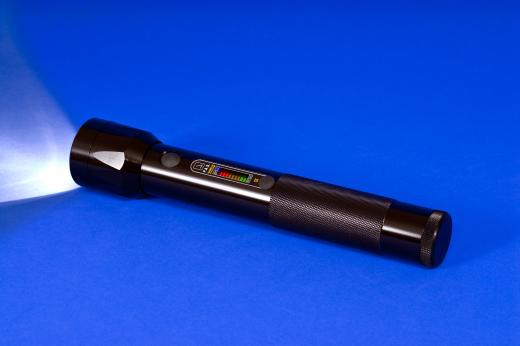
The specialized flashlights, known as passive alcohol sensors, appear as normal flashlights. But when one is placed within five to 10 inches of a motorist’s mouth, it can detect roughly whether he or she has been drinking lightly, moderately, heavily or not at all. Indicator lights illuminate to deliver the reading.

Those readings, while revealing, are not incredibly precise and, taken by themselves, would never be the sole basis for an arrest, King said.

Is anything the police do nowadays accurate?  The supposedly high-tech DUI breath machines police use are not accurate, field sobriety tests are not accurate, blood tests are not accurate and now we have DUI flashlights.  Instead of spending the money to make sure officers are properly trained, the police is spending their budget on unproven, inaccurate technology.

The downside here is these inaccurate devices will be the basis for DUI arrests because the only thing required for a DUI arrest is the opinion of the investigating officer; an opinion that has been biased by the flashlight results.  I am ready to bet that the bureaus using these flashlights will have a higher incidence of false arrests than before.

Now I’m just waiting for my alcohol-detecting 3D glasses.

Tagged with:


Another week, another breath testing scandal. Whether it’s Philadelphia or our nation’s capital it seems like states and counties all over the country are reporting the same issue- faulty breath testing equipment leading to erroneous BrAC readings and false DUI arrests and even convictions.  This week it’s Santa Clara’s turn.

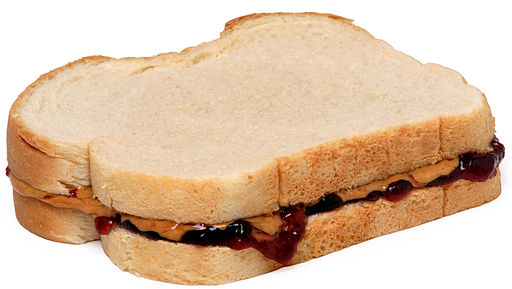
The problem is not limited to these cities, it is a widespread problem that stems from the incorrect implementation of DUI breath testing devices. These devices do not measure alcohol directly and thus can flag naturally occurring substances in the body as ethanol. For example if a diabetic has a very low sugar level, or someone in a hyperglycemic state whose body transforms the ketones to isopropanol and/or naturally produced acetone can be flagged as alcohol. In some cases, the use of everyday items like a hand sanitizers has lead to a DUI breath machine reporting a false reading.  You can even get a DUI for eating a sandwich. On top of that there are obvious design faults like in the scandal in Santa Clara County.

The icing on the cake is that individual police departments are responsible for maintaining and calibrating their own breath testing equipment, without any meaningful government oversight typically.  Imagine an office manager asking an employee to perform a tedious task as per a set schedule and create reports that no one will ever check.  What are the chances of this task getting done correctly?  This is exactly what is going on in police departments all across the country.  Officers with very little training are asked to calibrate their own DUI breath testing equipment without any regulatory body to check and see if they are in compliance.

The really sad part about all of this is that innocent people have been arrested and convicted of DUI violations based on this faulty evidence.  They have suffered prison time, lost pay, license suspensions and the humiliation of being a convicted criminal all because of faulty breath testing.

This has really gone on long enough.  How many innocent people have to suffer before our politicians wake up and find a better solution?

Recently, it was found that incorrectly calibrated and faulty DUI breath testing machines could effect thousands of DUI cases in Philadelphia.  I was recently interviewed about the DUI breath test problem in Philadelphia by The Inquirer (philly.com).

The Intoxilyzer 8000 is used for DUI breath test in Philadelphia and in many places in PA.

The Intoxilyzer 8000 is used for DUI breath test in Philadelphia and in many places in PA.

As a PA DUI Attorney and breath testing expert, I have found that the Philadelphia issue is not an isolated incident, it is evidence of a culture of ignorance, carelessness and a lack of oversight.

For example, there was a period of time where a police department in Lancaster was using simulator solution that was beyond its expiration date effecting all tests given for grater than six months last year. We have found individual issues with acceptance criteria and calibration of tests.

The problem is truly systematic. That is not hyperbole. It stems from the fact that Pennsylvania is the least-regulated state in terms of the verification of BAC and BrAC data in the country. The data is not readily available for inspection by anyone. Sometimes, it takes defense lawyers to go into court and get an order of court after a hearing. Sometimes it is ordered to be turned over. Sometimes it is not. It is a sad state of affairs.

If you are doing good quality and valid testing, then why hide the data? Why not show it off?

Other states are more enlightened. They put the data online so every one can see and everyone can double check.

But access to the data and the lack of oversight is just the tip of the iceberg.

Here in Pennsylvania, there is no central purchasing of breath testing equipment. Each jurisdiction and each police department and each police officer can decide what type of breath test device to use.  There is no central system to verify that the machines after purchase actually work as designed before they are deployed. There is no regular method of preventive maintenance. Routine maintenance is not performed and there is no regulation authority to take careless departments to task.  Officers are left to regulate and calibrate the machines on there own without the proper amount of training needed. There is no formal instruction in correlation coefficients or other basic issues of metrology (the science of measurement).

This problem is not unique to one department or one machine.  I have seen faulty machines in police departments all across Pennsylvania.  This is one of the reasons that every one of the DUI attorneys at The McShane Firm is a certified expert in breath testing and has the experience to cross-examine and challenge the results of faulty machines.

If you have any questions on breath testing or DUI in PA, please call 1-866-MCSHANE to speak with a qualified Pennsylvania DUI lawyer.

Every Friday we will take a look at some of the most commonly asked questions about Pennsylvania DUI so that we can clear up any misconceptions and provide you with the most up-to-date and accurate information.  Today:

I was recently arrested for a DUI and taken to the station for testing.  The machine was an Intoxilyzer 5000. I was told to blow into the machine and I did.  The machine printed “Invalid Sample” and on the second go around it read “Invalid Test” on the tickets.  The cops then said I refused the test and charged me with a refusal.  What does this all mean?

The machine you are referring is the Intoxilyzer 5000.  As a certified technician and owner of this machine, I know this machine inside and out.  Here is some information to clear up your confusion:

Invalid Sample

IIntoxilyzer DUI Breath Test Machinenvalid sample means residual mouth alcohol detector went off.  This means that the machine thinks that you still have alcohol in your mouth perhaps because you burped or you have GERD or a full 20 minute deprivation period hasn’t been achieved.  The police should know that this is not a refusal.  Instead, what they should do is wait 20 minutes and try again.  This is NOT a refusal. Sometimes the machine will display “Invalid Sample” or “xxx” on the display unit, and an officer will say that it is a refusal in total contravention to the design of the machine and claim that the person was sucking or huffing or twirling the mouthpiece with his/her tongue.  However, sucking or huffing would cause the steady tone that goes off when the machine is being used to stop emitting no sound and it would have read “Please blow” on the screen not “invalid sample”.

Invalid Test

There are three ways that gets printed on a card:  (1) the start button is hit by the operator during the test causing an abort (2) the test card is removed from the printer (which wouldn’t be printed on the card because it has been removed) and (3) the purge pump is unable to purge the chamber-ambient or the chamber is flooded.  This is NEVER EVER a refusal.

Unfortunately, often the police officers conducting these tests have not gone through enough training and make erroneous assumptions as in this case.

If you would like to ask a question, please submit it via the contact us link.


-Justin J. McShane, Esquire, Pennsylvania DUI Attorney

I am the highest rated DUI Attorney in PA as Rated by Avvo.com

You can follow me on Twitter, Facebook or Linkedin

Harrisburg DUI Lawyer Justin J McShane NBTA certification

Board Certified Criminal Trial Advocate
By the National Board of Trial Advocacy
A Pennsylvania Supreme Court Approved Agency

Not every police officer lies.  Not every police officer colors the truth.  Not every police officer embellishes.  But there are enough.  If there is one that is too many. 

Let’s face it police officers are human.  They are motivated like we all are.  To not lose, to win.  To do the job efficiently and some get lazy if not properly challenged.


Consider the two most recent controversies.

In his blog post titled "DUI Defense Attorney exposes outrageous memo telling San Diego California DUI prosecution blood draw witnesses how to testify!!" Rick Muller writes of a controversial memo that he uncovered wherein the police are actually coached in writing how to testify in blood cases.

He writes:

In a case San Diego California Drunk Driving Attorney Rick Mueller did, he obtained an amazing internal San Diego California DUI memorandum from a San Diego California DUI blood drawer.

These are the exposed instructions in that SDPD memorandum and potentially given by the San Diego California Police Department to their blood-drawing/laboratory technicians testifying in a San Diego California DUI trial:

"COURT TESTIMONY

You will be asked your name.

You do not have to remember drawing [blood from] the particular defendant. Just say you draw many patients each day you work and it is impossible to remember each one.

You may be asked how you draw the blood. It is the standard procedure you follow for ALL blood draws, EXCEPT that you use a NON-ALCOHOLIC antiseptic wipe (Benzalkolium) to cleanse the phlebotomy site. You ALWAYS follow the same procedure for every blood draw. The blood is drawn into grey top tubes provided by the San Diego Police Department. The tubes contain an anticoagulent (Potassium Oxylate) and a preservative (Sodium Fluoride). You check the tube for the presence of a loose, slightly pink powder before you use it. After you fill the tube with blood, you invert the tube 10 times to mix the blood with the anticoagulent/preservative. You will always mix any tube with an anticoagulent 10 times (you count the inversions). The important things to remember is that you always follow the same procedure, so even though you don’t remember this particular individual, you know that you drew the person following our standard procedure.

The suspect is identified by the police officer and, when possible, you check the ID or ask the suspect their name. The police officer completes the label with the suspect’s name, DOB, etc. You put your name, date, draw time, and place on the label and place the label on the grey top tube. You then place the grey top tube in the plastic chain-of-custody tube, put the cap on it, and seal it with the sealing tape provided by the SDPD. You then hand it to the officer and he takes charge of it.

"H:\My Documents\San Diego Police Dept\Forensic Staff\Court Testimony.doc"

These instructions on what to say in a San Diego California DUI trial are given to law enforcement witnesses testifying under oath in a San Diego California county court of law and at the San Diego California Department of Motor Vehicles.

San Diego California DUI blood or San Diego California DUI laboratory technicians are essentially told how to testify and what to say, not as to what they actually did -and not what they know – in an actual San Diego California DUI / drunk driving case.

This is simply outrageous.  The memo basically says ignore your oath to tell the truth, here is what you are to say regardless of what you actually remember or what you actually did.


But is this isolated to California?

No.  Consider this from  "1,200 DWI convictions in Texas to be set aside".

More than 1,200 driving while intoxicated convictions in Harris County are invalid after a contractor was convicted of faking inspections of alcohol breath testing devices, prosecutors said.

Deetrice Wallace, a Department of Public Safety contractor, told investigators that she had falsified inspections records for the South Houston and Clute police department intoxilyzers.

Buess said Wallace manipulated the machines instead of changing the reference sample every month, and pocketed $146,000.

From 2002 until she was arrested in October 2008, Wallace handled DPS instruments that were used to determine alcohol concentration in DWI cases for at least seven police departments, including League City, Friendswood, Webster, Seabrook, Galveston, Clute and South Houston.

Buess said Wallace signed off on about 4,000 test slips. Of those, some did not result in convictions and others were not in Harris County. Buess did not know how other counties would address the problem. The prosecutor was not optimistic about seeking 1,200 convictions again because the office will not have test results, and other evidence has been destroyed, including videotapes.

DPS officials invalidated all breath tests recorded by intoxilyzers under Wallace’s supervision because they could not pinpoint the date when her unethical behavior began.

Once contacted, the attorney of record will contact the defendant and determine if they want to try the case again. If the defendant wants a new trial, the district attorney’s office will agree to it.

The case will then start over in the court where the conviction was obtained.

Buess said some defendants who were convicted of two DWIs and a felony DWI may get a clean slate after the dust clears. She said one defendant who will be able to get a new trial was sentenced to 60 years in prison for a felony DWI.

"It’s just a massive problem that is not going to go away," Buess said. "It’s a huge mess."


Could this be happening with DUIs in Harrisburg, Carlisle, Lebanon, York, Mechanicsburg, Camp Hill, Hershey, Jonestown, Chambersburg or  in other places in Pennsylvania?

Is there anyone, besides me, who is bothered by the fact that every single police report recounts "an odor of alcohol, bloodshot, glassy eyes and slurred speech"?  It is all garbage.

There is only one way to expose it.  Continue to challenge the prosecution’s case.  Demand there be verified and actual proof based on truth.

As long as there are human beings, there will be temptation to cut corners, to do things wrong, and even to outright falsify.  We will stand in opposition to this.  Will you?

A FALSE POSITIVE:

We can think of a lot of things in our every day lives that can provide for false positives such as:

  • pregnancy tests
  • quick screen mammograms
  • prostate marker screening tests for cancer
  • PAP smear
  • BREATH TEST MACHINES!

We are all probably familiar with the idea of a false positive. Technically, Merriam Webster’s Medical Dictionary defines it as:

False Positive: Relating to or being an individual or a test result that is erroneously classified in a positive category (as of diagnosis) because of imperfect testing methods or procedures

Continue reading »