Archives

PA DUI Attorney Published Once Again

On September 26, 2011, in Justin McShane Qualifications, by Justin McShane
0
PA DUI Attorney co-authors another authoritative work on DUI science

PA DUI Attorney co-authors another authoritative work on DUI science

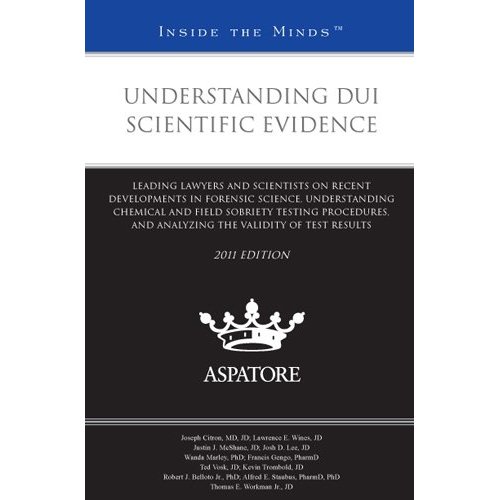
It is with great pride that I announce my latest published work.  I co-authored 2 chapters in the authoritative work: Understanding DUI Scientific Evidence, 2011 ed: Leading Lawyers and Scientists on Recent Developments in Forensic Science, Understanding Chemical and Field Sobriety Testing Procedures and Analyzing the Validity of Test Results. The two chapters I worked on are:

Chapter 3: The Top Ten Points in Establishing a Viable and Scientifically Based GER/GERD Defense to Evidentiary Breath Testing Cases

Chapter 6: Headspace Gas Chromatography with Flame Ionization Detector: What It Is and How to Cross-Examine an Expert on It

It is always an honor to be recognized by my peers as an expert in DUI science and this publication further affirms my standing in the legal community. If you need an expert opinion on your Pennsylvania DUI case, please call 1-866-MCSHANE for a free consultation.

As a respected DUI expert attorney, I have been invited to many DUI training seminars to share my expertise, particularly in the area of DUI blood testing. Gas Chromatography is the process used to measure blood alcohol content (BAC) and is considered by many prosecutors to be “invincible” and an “automatic conviction.” That is because most DUI attorneys do not have the expertise to be able to challenge this evidence properly. I have been able to use my scientific knowledge of this process in courtrooms across Pennsylvania and have been successful in defending my clients in the face of blood test evidence.

PA DUI Attorney Lectures on Gas Chromatography

PA DUI Attorney Lectures on Gas Chromatography

Over the past few weeks I have presented at lectures about DUI blood testing at four major DUI training seminars across the country.

1. American Chemical Society course by Dr. Lee Polite, BA, MBA, PhD and Harold McNair, PhD “Forensic Applications of Chromatography (GC/HPLC) and Mass Spectrometry: Headspace Gas Chromatography with Flame Ionization Detector and Mass Spectrometry and High Pressure Liquid Chromatography (a lecture laboratory course)”

The American Chemical Society is comprised mostly of scientists not lawyers. This is why this course is very important because it validates Attorney McShane’s scientific credentials in the field of analytic chemistry. This small group, week-long, hands-on laboratory course is Attorney McShane’s brainchild and legacy. The course is not only made up of instruction in the theory of Headspace Gas Chromatography with Flame Ionization Detector but also other forms of forensic chromatography and detectors such as Mass Spectrometry and diode array UV/Vis. The participants spend a full five days of actually preparing and operating the instrumentation. This is the third full course offered with two more full classes scheduled by the end of the year.

2. Texas Criminal Defense Lawyer’s Association “DWI Defense Project-DWI Science: What You Must Know to Win!”

At this one day seminar, Attorney McShane taught the attorneys present how to spot issues in DUI blood testing by teaching the basic principles of Headspace Gas Chromatography with Flame Ionization Detector that is used in determining Blood Alcohol Content. He was rated as the top-rated speaker yet again for his entertaining and informative presentation.

3. Maryland Criminal Defense Attorney’s Association seminar “7th Annual Advanced DUI Seminar”

At this day-long seminar, Attorney McShane was once again called upon to teach Headspace Gas Chromatography  in a long format. Attorney McShane not only taught the basic scientific principles as he has done before, but also detailed advanced issues including resolution, sensitivity, selectivity and method validation issues.

4. The California Public Defenders Association “Third Annual Two-Day DUI Defense Practice Institute”

At this conference, Attorney McShane not only taught the attendees about Headspace Gas Chromatography with Flame Ionization Detector that is used in determining Blood Alcohol Content, but also took part in a panel discussion on best practices in defending all manners of DUI accusations.

If you are looking for a PA DUI expert, then call The McShane Firm. We challenge you to ask the hard questions and find the very best DUI attorney in PA to handle your case. When you meet with an attorney ask them about Gas Chromatography and when was the last time they lectured about the subject at a DUI seminar. Ask the tough questions and make the selfish decision to choose the very best lawyer to protect your freedom.

The PA DUI Attorney Challenge Part 2: How Technical are DUI cases?

There are close to 50,000 lawyers in Pennsylvania.  Of those, there are thousands of lawyers who are willing to represent your Pennsylvania DUI case. So how does a person with no legal background sift through all of these lawyers to find the best DUI Attorney in PA?

If you don’t know what you are looking for, your never going to find it.  That is I have put together this series- to help common citizens recognize the important traits of the best DUI lawyers.  Before we get to that, we are tackling the question of Why do I need the best DUI attorney in Pennsylvania to handle my case? Last week we discussed the severity of Pennsylvania DUI Penalties and how a DUI charge can effect the rest of your life.  Today we will deal with the question How technical are Pennsylvania DUI cases?

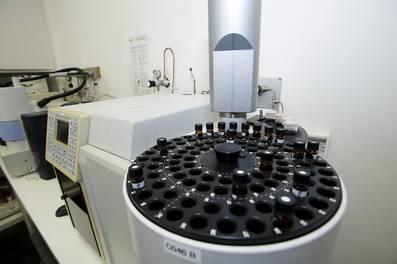
DUI Blood Testing Equipment

Highly Technical DUI Blood Testing Equipment

The short answer is that defending DUI cases (especially in Pennsylvania) requires a great deal of specialized technical knowledge.  There are many different aspects, from the evidence to the laws, that make DUI cases very difficult to defend without the proper knowledge.  In fact, it is often truthfully stated with no exaggeration that it is easier to defend a murder well than a DUI well. You just have to know a lot more.

DUI Tests- One of the most important pieces of evidence in any Pennsylvania DUI cases is the result of your blood or breath test.  But just because the test report says your Blood Alcohol Content (BAC) is such and such, does not make it true.  Everyone’s body is unique and there are a lot of variation.  For example, there are some chemicals that your body naturally produces that breath machines might interpret as being drinking alcohol (ethanol).  An expert DUI lawyer also needs to know about the inherit weaknesses of each type of test and possible sources of error and the limitations that every from of BAC testing has.

SFSTs- The Standardized Field Sobriety Tests (a.k.a DUI roadside tests) may seem very simple but they are also very technical.  There is a specific methodology that needs to be followed when administering these tests to yield any scientific benefit.  Sadly, according to expert research, 93% of the time officers incorrectly administer the DUI roadside tests. However, it takes a highly experienced expert to be able to challenge the inconsistencies in these tests.

Understanding Pennsylvania DUI Law- Pennsylvania DUI Law is very complex.  There are different tiers and the penalties increase for repeat offenders.  There are various legal options which may or may not be beneficial in your case.  There are also various legal precedences which establish guidelines which need to be followed.  For example, a blood test in and of itself is not admissible in court without the presentation of the person who administered the tests and without laying the proper legal foundation.  There are also various constitutional issues that need to be examined like establishing whether or not there was probable cause to stop the driver in the first place.

Understanding Your Specific Situation- In my experience as a Pennsylvania DUI Lawyer who has represented several hundred clients, no two cases are the same.  Every person is unique and so is their case.  Some legal avenues are not applicable to certain people or situations.  Some people like truck drivers and school teachers are in danger of losing their jobs.  It requires a great deal of experience, care and attention to understand your concerns and your situation.

Beyond these aspects there are many other very technical aspects involved in Pennsylvania DUI cases.  This is why it is in your best interest to take the time and investigate so you can find the best Pennsylvania DUI attorney to defend your case.

Pennsylvania DUI Lawyer Justin McShane Earns Board Certification in DUI Defense

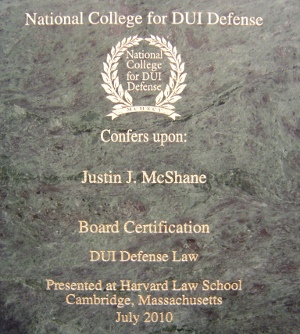
Pennsylvania DUI Lawyer Justin McShane Earns Board Certification in DUI Defense

Any regular reader of this blog knows the emphasis The McShane Firm puts on advanced legal training for DUINo DUI lawyer in Pennsylvania has a training resume that matches mine.  In fact, by the end of the year I will have put in over 600 hours worth of advanced DUI and forensic training.  That’s the equivalent of 15 working weeks.

It’s only fitting that I recently became the first (and so far only) Pennsylvania DUI Lawyer to be Board Certified in DUI Defense. This certification is issued by the National College for DUI Defense and is the only Board Certification in DUI Defense accredited by the American Bar Association.

From the NCDD website:

In an effort to assist the public in recognizing lawyers who focus their practice on defending those accused of DUI and who have demonstrated their competence to do so, the Board of Regents certified its first lawyers in 1999. In 2003 the American Bar Association recognized DUI Defense Law as a legal specialty area of practice, and the following year the ABA accredited the College to certify lawyers in the DUI Defense Law specialty area. The NCDD is presently the only organization accredited by the ABA in this specialty field.

Board Certification in DUI Defense is only issued after completion of a rigorous examination process:

In order to be Board Certified, an applicant must satisfy certain minimum practice requirements and pass both written and oral examinations testing his or her knowledge of substantive and procedural law in this field. Specifically, the examination focuses on scientific issues, the NHTSA guidelines on field sobriety tests and drug recognition tests, as well as other legal and ethical issues applicable to the defense of drunk driving cases.

This is definitely an exclusive honor and a distinction that I am very proud of and it is a testament to the hard work I put in for the citizen accused of a DUI.  If you or someone you know is accused of a DUI in Pennsylvania call 1-866-MCSHANE and sit down with one of our highly trained DUI lawyers.  Only The McShane Firm, Only the best.

DUI ScienceDUI involves a lot of science.  From biology to physiology to chemistry to pharmacology, a diligent DUI attorney must have a firm grasp of the scientific aspects involved in a DUI case.

In an effort to provide the very best representation to my clients, I have spent countless hours studying scientific papers, attending seminars and even performing hands-on laboratory practicals.  I have been lucky in that I have become recognized among my peers, meaning other lawyers, as being very well educated on the scientific aspects of defending a DUI case.  However, this acknowledgment does not just stop with my peers.  I have been recognized by other scientists as being very well-studied on the scientific aspects related to DUI prosecution.  This recognition has resulted in an invitation to lecture about highly technical issues in analytical chemistry  and in particular hospital blood at the upcoming American Chemical Society national meeting.  There I will be presenting a lecture entitled "Enzymatic assaying: The indirect measurement that is non-specific to ethanol that is being misapplied from the clinical world into the forensic arena".  It is a highly technical presentation that I have been selected to present in front of an audience of scientists.

Being selected to present this at the ACS national meeting is quite an honor in that it recognizes the hard work I have put into the field of analytic chemistry and the forensic sciences involved in DUI cases.


-Justin J. McShane, Esquire, Pennsylvania DUI Attorney

I am the highest rated DUI Attorney in PA as Rated by Avvo.com

You can follow me on Twitter, Facebook or Linkedin

Harrisburg DUI Lawyer Justin J McShane Esquire earns<br />
criminal law certification through NBTA

Board Certified Criminal Trial Advocate
By the National Board of Trial Advocacy
A Pennsylvania Supreme Court Approved Agency

Justin McShane, Esquire, Harrisburg DUI Lawyer, is interviewed by CNN Legal Analyst, The Early Show commentator, and CBS News Legal Analyst Lisa Bloom

Here, Justin McShane who is a DUI Lawyer in Harrisburg, of the McShane Firm, LLC discusses with Lisa Bloom the science and the technology in DUI prosecutions as well as the potential sources of error when it comes to breath and blood testing.  The reasons someone who is accused of a DUI should call an attorney immediately is also addressed in this video.  Other topics such as Pennsylvania DUI expungement and Driving Under the Influence of Drugs (DUID) are discussed.  The popular question of "Should I do the roadside tests?" is asked.  Watch to hear the answer and the reasoning.


Share/Bookmark


-Justin J. McShane, Esquire, Pennsylvania DUI Attorney

I am the highest rated DUI Attorney in PA as Rated by Avvo.com

You can follow me on Twitter, Facebook or Linkedin


Harrisburg DUI Lawyer, Justin McShane is interviewed by CNN Legal Analyst, The Early Show commentator, and CBS News Legal Analyst Lisa Bloom

Here, Justin McShane who is a DUI Lawyer in Harrisburg, of the McShane Firm, LLC discusses with Lisa Bloom the specialization that is required to be one of today’s top DUI attorneys in the nation and the specialized training that is required.

Share/Bookmark


-Justin J. McShane, Esquire, Pennsylvania DUI Attorney

I am the highest rated DUI Attorney in PA as Rated by Avvo.com
You can follow me on Twitter , Facebook or Linkedin.

My good friend and National College for DUI Defense, Inc. colleague Jay Ruane of Connecticut is hosting a DUI/OUI seminar this Friday, December 4, 2009 entitled:  "Defending OUI cases in CT Training & Seminar".

It will be held at the Legislative Office Building – Hearing Room 2C in Hartford, CT

It is presented by the Division of Public Defender Services and the CT Criminal Defense Lawyers Association and Ruane Attorneys at Law.  I will post more on it.

I am all set to present on the intriguing emerging field of Pennsylvania DUI defense and national DUI defense in the form of Driving Under the Influence of Drugs (DUID).  It is a highly specialized and difficult area that combines pharmacology, pharmacokinetics, pharmacodynamics and psychomotor function.  It is indeed the wave of the future.  Very few attorneys have developed and expanded their knowledge base to include this important future area of DUI law.


Pennsylvania DUI Attorney invited to speak to Connecticut DUI Attorneys

AGENDA

8:45 – 9:00        Introduction & Welcome

9:00 – 10:15        The Draeger 9250
            Hansueli Ryser, VP, Draeger Safety Equipment

10:15 – 10:30    Q & A with Hansueli Ryser

10:30 – 10:50    20 Important DUI Cases in 20 Minutes
            Atty. Teresa DiNardi and Atty. Sean Barrett , Ruane Attorneys

10:50 – 11:00    Morning Break

11:00 – 11:30    Using Melendez Diaz in DUI Cases
            Atty. Chris Duby, North Haven, CT

11:30 – 12:15     Cross-Examining Dr. Powers  
             Director of Controlled Substances Lab, CT
            Attys. Jim and Jay Ruane, Ruane Attorneys

12:15 – 12:45    Basics of the SFSTs
            Atty. Jen Zito, President-elect, CCDLA

12:45 – 1:00        What Changed in the New DUI Law?
            Zachary Reiland, Legal Intern, Ruane Attorneys

1:00 – 2:00        Lunch Break

2:00 – 2:45        Cross-Examination of the Field Test Officer
            Atty. Jack Diamond, Boston, MA

2:45 – 3:30        Drug DUI Case Defense
            Atty. Justin McShane, Harrisburg, PA

3:30 – 3:45        Afternoon Break

3:45 – 4:30        Defending Against a Dual IR/EC Test
            Atty. Evan Levow, New Jersey
 

 Come on out and see us.  There are more than two hundred (200) people signed up so far.  Why not join us?


border="0" alt="Share/Bookmark"
src="http://static.addtoany.com/buttons/share_save_171_16.png" />


-Justin J. McShane, Esquire, href="http://www.themcshanefirm.com/attorneys/mcshane" title="PA DUI Lawyer Justin
McShane">Pennsylvania DUI Attorney

I am the highest rated DUI Attorney in PA as Rated by Avvo.com
You can follow me on Twitter , href="http://www.facebook.com/JustinMcShane">Facebook or href="http://www.linkedin.com/profile?
viewProfile=&key=36745950&trk=tab_pro">Linkedin.

First off what is Chromatography?

Chromatography is strictly and simply speaking "separation science".  It is the study of how an analyst can take a complex matrix (compound) and separate it out into its component parts.

It is a relatively "new" form of analytical chemistry in that the first true use of modern chromatography is usually attributed to Russian botanist Mikhail Semyonovich Tsvet, who used columns of calcium carbonate for separating plant pigments during the first decade of the 20th century during his research of chlorophyll.

In is very basic nature, and grossly oversimplified, it involves passing a complex non-separated mixture presented to the machine in a "mobile phase" expelled through a stationary phase. The stationary phase separates the analyte to be measured from other molecules of a different type present in the mixture based on differential partitioning between the mobile and stationary phases (affinity). This results in differential retention time on the stationary phase and thus making the separation.

Say what?


Imagine you live at a house that has a driveway.  At the bottom of this driveway you put a pile of different types of balls resting at the bottom of this inclined, paved driveway.  This pile includes all different types and kinds of balls with different surface areas and textures such as ball bearings, marbles, ping pong balls, golf balls, wiffle balls, handballs, tennis balls, hockey pucks, baseballs, soccer balls, volley balls, basketballs, footballs, and bowling balls. You want to find the bowling ball so you can go bowling later in the afternoon, but you are blindfolded for some reason (stick with me here, it is just an analogy),   You are not allowed to touch the group, but you have a tool to help separate them out.  A leaf blower.  So, you know that based upon its make up namely its weight the bowling ball will take a very powerful leafblower as opposed to say the wiffle ball.  So, you attempt to move this motley collection of balls up the driveway with a normal leafblower. Some of the pile will quickly move to the top of the driveway immediately, some balls will migrate at varying speeds, and some balls may take an eternity to reach the end of the driveway just like our bowling ball.

The difference in the time that each type of ball takes to travel to the top depends upon the characteristics of each ball such as the surface area, the weight and so on. Obviously, the lighter balls travel more quickly.  The heavier ones might take forever. Also, some balls may take longer due to their shape, like the hockey puck or the football. The different balls interact with each other as the air from the leaf blower acts on the pile. This interaction may hinder or accelerate the ball’s travel as the balls strike each other. The surface characteristics of the ball may be important, as in the examples of the tennis ball and golf ball.

What you are doing here is technically speaking separation science.  You are separating out a complex mixture into its component parts.

What is Gas Chromatography?

Gas chromatography (GC) is a specific form of Chromatography.  It is a separation technique in which the mobile phase is a gas.

Gas chromatography (GC) is based on a partition equilibrium of analyte between a solid stationary phase (often a liquid silicone-based material) and a mobile gas (most often Helium). The stationary phase is adhered to the inside of a small-diameter glass tube (a capillary column) or a solid matrix inside a larger metal tube (a packed column).  The GC itself is a qualitative analytical method whereby if it alone is used, it can only tell that the characteristic is present by the retention time as compared against a known  At best, using only a GC, you can tell that the suspect analyte is consistent with the characteristics of the known.  It does not necessarily mean that it is the analyte until you use a detector of some level of analytical sensitivity,

How is it used in Pennsylvania DUI prosecution?

It is a whole blood analysis technique (in fact, it is the only direct form of whole blood analysis) used to separate out the analyte of interest (often times either alcohol or drugs of abuse).  But what it really does is scare to death most DUI attorneys.  It is hardcore science that most even experienced attorneys are scared to hear about. 

Why is it so important in Pennsylvania DUI prosecution?

It drives a stake in the heart of many an experienced DUI attorney.  In fact, most attorneys when those hear those dreaded words plead the case out.

I’m not one to be scared about GC results in Pennsylvania DUI arrests.

So, realizing that hospital blood testing was on its way out of use, I gathered up a bunch of my colleagues and we went to Chicago to take an American Chemical Society course entitled:  "Gas Chromatography: Fundamentals, Troubleshooting, and Method Development".  It was a week long hands-on laboratory course conducted through the American Chemical Society and instructed by Dr. Lee N. Polite, MBA, PhD of Axion Labs.

PA DUI Attorney Justin McShane at Gas Chromatography training              Pennsylvania DUI Attorney Justin McShane knows Gas Chromatography

(Pictured:  Pennsylvania DUI Attorney Justin McShane with the attorneys who participated in the Course on the left and on the right with all of the attendees)

According to the Course Description:

This course is designed for beginners and intermediate-level practitioners who want practical laboratory experience in gas chromatography (GC). The lectures—supplemented by problem sets, slides, and video presentations—provide the fundamentals needed to understand the technique and instrumentation involved in this powerful analytical tool. At the end of the class, you will have mastered the fundamentals of GC, participated in six hands-on laboratory sessions, performed reference and literature searches, and learned specialized techniques based on your specific interests.

PA DUI Attorney Justin McShane learns how to make a direct injection on a GC  PA DUI Attorney Justin McShane makes a direct injection into a GC  PA DUI Attorney Justin McShane runs the GC machine

(Pictured:  Pennsylvania DUI Attorney Justin McShane prepares a direction injection and a run on the GC)


Boy was that an understatement!  It was a great course.  Here is why…

Agenda
  • Day 1: GC Overview – introduction to GC; GC instrumentation overview; practical GC theory: packed & Capillary; Laboratory: GC Familiarization.
  • Day 2: Injection Techniques & Quantitative Analysis – overview of sample introduction techniques; capillary inlet systems: split, splitless, on-column, large volume injectors; qualitative and quantitative analysis; Laboratories: comparing injection techniques, troubleshooting injector problems, internal vs. external standard techniques.
  • Day 3: Columns – packed column overview; capillary column technology; temperature programming; laboratories: column dimension and phase selection, Laboratory: fast GC.
  • Day 4: Detectors – overview of available detectors; details of FID & TCD; GC/MS; Laboratories: GC detector operation, troubleshooting FID and TCD.
  • Day 5: Method Development & Temperature Programming – temperature programming; fundamentals of method development; laboratory: develop a method for a completely unknown mixture.

I took a lot away from it.

PA DUI Attorney Justin McShane replaces a capillary column on a GC

(Pictured:  Pennsylvania DUI Attorney Justin McShane installs a capillary column)

But why bother?

We must remember that the Defendant has no burden to prove any facts in this proceeding at all. Instead, the burden of proof remains at all times with the Commonwealth and the evidence presented must always prove guilt beyond a reasonable doubt or the Defendant maintains the presumption of innocence and the result must be not guilty.

The blood result as reported by the Government must be PROVEN as reliable, accurate, precise, repeatable, traceable, verified and true. It is a matter of fact that the Jury must resolve and it be proven to all of them and they must be satisfied of this fact beyond a reasonable doubt.  Otherwise, the Defendant maintains the presumption of innocence and the result must be not guilty.

In order for a Blood Alcohol Concentration as measured by blood to be reliable, accurate, precise, repeatable, traceable, verified and true and to form the basis for a conviction, there must be a full examination of all of the evidence.

A very good Pennsylvania DUI attorney during the trial will be able to point out that in determining the reliability or veracity of the reported BAC it is essential to have all of the information concerning the pre-collection storage of the kit, the blood collection itself, the transportation and storage of the specimen, the type of analysis, the method of the analysis, and the accuracy, calibration and reliability of the analyzing instrument. Further, it is well-known that in order to have a truly valid and reliable result, the specimen must be handled in a specific way, including:

  1. The pre-collection storage of the specimen kit must be maintained within tolerance and per the manufacturer,
  2. The blood collection itself must be performed in a specified manner,
  3. The handling of the specimen post-collection must be performed in a specified manner,
  4. The transportation and storage of the specimen post-collection must be performed in a specified manner,
  5. The preparation of the specimen before the analysis must be done in a specified manner,
  6. The instrument used to analyze the specimen must be set up in a specific way.
  7. The instrument used must be maintained in a specific way,
  8. The analyst must know what he she is doing and must be tested in terms of his/her proficiency.
  9. The instrument used to analyze the specimen must be calibrated and checked for accuracy and precision,
  10. The pre-analysis preparation of the sample itself must be performed in a specified manner
  11. The analysis itself must be performed in a specified manner, and
  12. The reporting of the specimen as tested must be performed in a specified manner.

These and many other issues are essential for the proper determination of the reliability, accuracy, precision, repeatability, traceability, verification and the truth of the blood alcohol results.

 Thank you to Dr. Lee N. Polite, MBA, PhD.

PA DUI Attorney Justin McShane with Dr. Polite at the ACS Short Course in Gas Chromatography

(Pictured:  PA DUI Attorney Justin McShane with Dr. Polite at the ACS Short Course in Gas Chromatography)


Share/Bookmark


-Justin J. McShane, Esquire, Pennsylvania DUI Attorney

I am the highest rated DUI Attorney in PA as Rated by Avvo.com
You can follow me on Twitter , Facebook or Linkedin.

Tagged with:
 

On Wednesday and Thursday of this past week, Rick Fulton of the Gettysburg Times, wrote reported that WellSpan hospital system in Central Pennsylvania will no longer support or offer to provide blood testing for Court use of Blood Alcohol Content testing (BAC). The BAC testing, of course, is so important in a DUI prosecution and is one of the fundamental pieces of, and oftentimes the only, evidence against a citizen among us who has been accused of a DUI Rick Fulton wrote a great article.  You can access it in full here “Hospital explains ban on DUI tests”.

It presents two main issues as to why the Hospital system will no longer offer or support BAC testing. I am proud to say that our firm, The McShane Firm, LLC has been successfully litigating both aspects in Pennsylvania. In fact, to our knowledge no other attorney or firm has advanced these types of defenses in Central Pennsylvania and likely not in the entire Commonwealth of Pennsylvania.

In his article reporter Rick Fulton wrote:

William Lavery, manager, WellSpan Office of Health Public Relations & Communication at Gettysburg Hospital, confirmed Wednesday that the testing service was being discontinued at the hospital, but that the facility will continue to draw the blood.

[William] Lavery, manager, WellSpan Office of Health Public Relations & Communication at Gettysburg Hospital] stated there were two fundamental reasons for the discontinuation of the service, the first concerning accreditation of the hospital’s laboratory and the second relating to increased demands on the laboratory.

Regarding accreditation, he said, “In our case, the hospital laboratory is unable to meet a new testing regulation introduced by the College of American Pathologists. They generate standards and they are our primary accreditation agency.”

“If we were to lose accreditation by not adhering to their regulations, we’d really jeopardize the lab’s primary role of providing health care to our patients,” Lavery said.

In addition, the legal system, particularly DUI defense attorneys, are demanding more and more from laboratories that conduct BAC testing.

This is causing an increasing drain on the hospital’s resources.

“It’s (legal demands) becoming an increasing impact on our lab resources…trying to meet the legal requirements that these cases (generate),” he said.

“More and more,” Lavery stated, DUI defense attorneys subject the hospital lab’s to strenuous (expectations), which include responding to subpoenas that go beyond the hospital’s ability to respond to them.

“Attorneys are mandating that a clinical (hospital) lab be able to demonstrate forensic abilities, to respond to documents, provide staff competency documentation…those are things a forensic lab is more equipped to handle,” he stated.

The load and responsibility has caused an “increased demand on our resources…A clinical (hospital) lab may not be able to operate (the same level of service) as a forensic lab,” Lavery stated, pointing out that what is being asked of the hospital’s clinical laboratory are things that a forensic lab deals with routinely.

The majority of the hospitals in the area (south central Pa.), he noted, have already ceased DUI testing, according to the communications manager. “A lot of area hospitals made that decision a couple of years ago.”

I have blogged about this first issue in “Piece of Paper Says Your Guilty”.  It outlines the recent United States Supreme Court decision of Melendez-Diaz and its import.

The Real Problem
Now I want to complete the thought of the article and blog about the absolute consensus of the scientific community that hospital blood testing is not forensically acceptable. I will try to explain why as briefly as I can. For over five (5) years, I have personally been leading the fight in Pennsylvania in this area of medicolegal litigation pushing the science or really the lack of forensic reliability of hospital blood BAC testing.

First some background….

In the Commonwealth of Pennsylvania, there are various degrees of prohibited BAC levels, called per se levels. They are 0.08, 0.10 and 0.16 with enhanced penalties depending upon what your blood level is. These per se levels are measured as grams percent AND MUST BE expressions of whole blood. A conviction on a per se offense cannot be based upon plasma or serum. The expression of the BAC must be to whole blood and whole blood only.

So, we begin at the beginning, shouldn’t we?

Are hospital blood tests truly whole blood tests?

As shocking as it is to most people, the real answer is NO.

There is but one analytical device that performs a whole blood analysis, it is called a gas chromatograph. It has a detector to allow for quantification which is usually a Flame Ionization Detector. Using a mass spectrometer is the best way of conclusively confirming the analysis, but it is not often used.

So what are they doing?
The hospital based blood test performed at the hospital is scientifically referred to as a plasma enzymatic indirect test based on spectrophotometry (colormetic response) of treated de-proteinzed vortexed, centrifuged aspirated supernate of the original whole blood specimen.

Wow what the heck does that mean? Don’t worry keep reading and I promise it will all make sense to you.

We will shorten all of this up and simply refer to it as “hospital blood” or “hospital blood testing”.

Ok. So let’s take it step by step.

PROBLEM 1:

An “enzymatic indirect test” means that we are not testing how much ETOH (drinking alcohol or Ethyl Alcohol) is in the whole blood. Instead what we are testing is an indirect measure. We use a known enzyme (NAD+) amount and hope that it will react to ETOH and create a quantifiable result as the two interact resulting in Acetaldehyde+NADH+H+

So chemically, it looks like this….

Ethyl Alcohol+ NAD+ —-> Acetaldehyde+NADH+H+

Instead it is measuring the reaction difference to an enzyme at a specific wavelength. Hospital analysis is by enzyme assay. An enzyme is added to the totally prepared sample. That enzyme (NAD) reacts in the presence of alcohol (and other things) and forms another enzyme (NADH). The amount of NADH is then measured (as relative to the NAD remaining) to determine the amount of alcohol in the sample.


Still don’t follow
? Don’t worry, I follow through on all of my promises keep reading.  I will make it clear.

Ok it’s really simple if we relate it to something we know—the good old bathroom scale.

I want you to suppose that you want to know how much your 6 year old daughter weighs. There are basically two (2) ways: a direct way and an indirect way.

What would make the most sense and is the most accurate is to take out your bathroom scale and put your daughter on it and voila, we have the weight. This would be like using a Gas Chromatograph. It is a direct measure of the weight of your daughter.

Now, let’s think about another way to try to get at her weight. I suppose you could step on the scale and see how much you weigh (a known), get off the scale and then have your 6 year old daughter hop on your back piggyback style and then both you and her on your back step on the scale having seen what your combined weight is. You both get off. You would then take your combined weight and subtract it from your known weight that you got on the first measurement and voila, you might have her weight.

What happens next? Your spouse who watched the whole escapade looks at you with a puzzled look and says you are silly and she doesn’t understand why you did it this indirect way when the direct way would be easier and more accurate. This is exactly like hospital blood.

Makes sense now, right? Good.

In conclusion, indirect measurements are never forensically or scientifically acceptable when there is a direct method available. That is the first reason why hospital blood is forensically and scientifically unacceptable.

PROBLEM 2:

Issue number two is the type of analytical measuring device used. It is based on spectrophotometry (a colormetic response). Spectrometry is grossly over simplified as this. Spectrophotometry involves the use of a spectrophotometer. A spectrophotometer is a photometer (a device for measuring light intensity) that can measure intensity as a function of the color (or more specifically the wavelength) of light. Important features of spectrophotometers are spectral bandwidth and linear range of absorption measurement.  It is rooted in Beer’s Law.

In short, the sequence of events in a spectrophotometer is as follows:

  1. The light source shines into a monochromator.
  2. A particular output wavelength is selected and beamed at the sample.
  3. The sample absorbs light.

We use an energy source such as a light, and a detector (specifically a photo detector) on the other end of sample chamber. Then we run the sample, or analyte, in-between the energy source and the photo detector. If the analyte is not present, it is smooth sailing as the energy emitted by the energy source should not be impacted (i.e., no loss of signal energy-it remains at the same strength). If there is analyte present, then it will interfere with the energy emitted by the energy source. The photo detector detects less energy. A comparison is made between what we would expect versus what we got as measured by the photodetector.

Colormetric means that there is a color response (lighter or darker in this case) that depends upon the concentration of the analyte.

Wow? What does that mean?

Here are good pictures that show what I was conveying.

Think of taking a laser pointer and trying to shine it through a glass of clear water versus a glass of Kool Aid.  The laser pointer will mostly go through the clear water with little loss of signal, but the Kool Aid experiment will result in much less signal going through.  It’s that simple.

PROBLEM 3:

The third issue concerns the limitation of the technology itself. As mentioned above, the machine is based upon spctrophotometry and is a colormetric response. As such we need something that is basically pure and clear.  Otherwise, if it is dark and dirty, then the response is not utterly remarkable. In other words, you cannot tell. What is dirty and darker than blood?

Blood is a viscoelastic complex matrix full of a lot of stuff. Hence, plasma is used. Whole blood is defined as blood from which none of the elements have been removed. Plasma is defined as the fluid portion of the blood in which particular components are suspended.  The components that are suspended consist of red corpuscles, white corpuscles and platelets. Whole blood and plasma look very different as one can see below.

So to clean it up, and transform it into plasma, they have to do the following. They have to strip the protein from it. This is done by adding a de-proteinizing agent such as Trichloroacetic Acid (TCA). TCA will bond with the protein and after centrifuging, it will become solid and a noticeable pellet will form at the bottom.

The blood is further transformed through the centrifuging process. Just like anything that is centrifuged, the heavy parts go to the bottom and the lighter parts are separated to the top. This is called the supernate (the top stuff) and the precipitate (the bottom stuff) division. With blood, heavy parts such as the blood’s red blood cells and the pellet from the TCA reaction are at the bottom. The plasma and the alcohol (if there is any) are at the top because they are lighter.

Next the top part is removed by pipetting. This is called aspirating the supernate. [as an aside, one hospital lab surprisingly doesn’t use pipettes to get an accurate amount, but rather simply pours the supernate into a testing cup]. The aspirated supernate then makes its way into the analytical device.

Now if you are paying attention, you might be asking yourself “Hey? What happens to all of the rest of the specimen?”  The answer is that it gets thrown out. It is never analyzed.

PROBLEM 4:
This is the perfect lead into the fourth issue as to why hospital blood is forensically unacceptable. It has to do with the legal requirements to sustain a conviction. As mentioned above, in the Commonwealth of Pennsylvania, there are various degrees of prohibited BAC levels, called per se levels. They are 0.08, 0.10 and 0.16 with enhanced penalties depending upon what your blood level is. These per se levels are measured as grams percent AND MUST BE expressions of whole blood. A conviction on a per se offense cannot be based upon plasma or serum. The expression of the BAC must be to whole blood and whole blood only.

So what do they try to do?

So in typical lawyer fashion, we try to force the round peg into the square whole and force a “conversion” factor that is supposed to adjust or convert the raw number for that big legal problem.

Sounds good in theory if you don’t mind the indirectness, but here is the dirty little secret. The scientific community cannot agree on what this all important number should be.

First, there is absolutely no consensus in the scientific community as to the proper conversion factor. There is no number. Therefore, as there is no scientific agreement, then no number should be used by the Courts. It is a basic Daubert/Frye matter. The government as the proponent of the evidence has the burden to prove it is reliable and based on sound science. The very fact that there are studies that conclude that there is overstatement of plasma to whole blood as low as 1.10 overstatement to as high was 1.59 make it so. That is a 69% swing. Come on!  IN fact, it is now fairly well-settled that the relationship is nonlinear, which means that any conversion factor employed is letter better than a wild guess with no data to support it.  The first to publish with data that there relationship is nonlinear was Barnhill, Herbert, Wells in their peer-reviewed study entitled “Comparison of Hospital Laboratory Serum Alcohol Levels Obtained by an Enzymatic Method with Whole Blood Levels Forensically Determined by Gas Chromatography.”

The conversion factor depends on hematocrit (packed cell volume) entirely (well almost entirely, but for the sake of brevity it is the most important part). Serum or plasma (almost-one article had a statistical artifact) always over estimates BAC. Plasma actually much more so.

PROBLEM 5:

The fifth issue has to do with the specificity. In order for a measuring device to be acceptable it has to measure only what it intends to measure specifically to the exclusion of everything else.

What does that mean?

If you went to Home Depot and bought a tape measure, but when you got it out of the box, it clearly was mislabeled in that it looks like a ruler, but you unspool it and it turns out to have no markings on it, and it turns out to have a thermometer in the middle of the spool.  Boy that is a problem, isn’t it?  They are both measuring devices:  one for distance, the other for temperature.  But the crappy tape measure that is really a thermometer is not a specific measuring device as to distance at all.

So here is a fundamental flaw as to hospital blood.  It also is NOT specific to ETOH to the exclusion of all other matters. So, it is not direct and not specific.

Wow!

One of the well know problems is the use of IV administered ringers lactate. Some of our clients were at the hospital due to injury. If so, we would want to look for ringers lactate or any sort of ringers solution application being used OR if there had been any sort of significant trauma as that will release lactate as well.

A little history…Ringer’s saline solution was invented by Sydney Ringer, a British physiologist. The solution was further modified by Alexis Hartmann for the purpose of treating acidosis in children. Hartmann modified the solution by adding lactate, which mitigates changes in pH by acting as a buffer for acid. Thus the solution became known as ‘Lactated Ringer’s Solution’ and later, ‘Hartmann’s solution’ Lactated Ringer’s Solution is often used for fluid resuscitation after blood loss due to trauma, surgery, or a burn injury. Previously, it was used to induce urine output in patients with renal failure.  Lactated Ringer’s Solution is used because the byproducts of lactate metabolism in the liver counteract acidosis, which is a chemical imbalance that occurs with acute fluid loss or renal failure.

The intravenous dose of Lactated Ringer’s Solution is usually calculated by estimated fluid loss and presumed fluid deficit. For fluid resuscitation the usual rate of administration is 20 to 30 ml/kg body weight/hour. Lactated Ringer’s Solution is not suitable for maintenance therapy because the sodium content (130 mEq/L) is considered too high, particularly for children, whereas the potassium content (4 mEq/L) is too low, in view of electrolyte daily requirement.

Why is this so important?

You have to understand that in a trauma situation, they don’t care about the legal ETOH. They care about keeping someone alive and not allowing them to go into shock. So, oftentimes they will put IV’s into each arm and infuse (i.e., squeeze the IV bag really hard and rapidly) to get into the veins as soon as possible. If they take the legal ETOH sample on the same arm, then they have really really large issues. It is an electrolyte replenishment therapy (i.e., fluid resuscitation).  It invites havoc into the BAC determination and process.

The effect of ringers on a hospital blood test has to do with the manner of hospital analysis not the fact that the hospital test is a plasma test. As explained above, hospital analysis is by enzyme assay. An enzyme is added to the plasma sample when it is within the machine. That enzyme (NAD) reacts in the presence of alcohol and forms another enzyme (NADH). The amount of NADH is then measured (relative to the NAD remaining) to really indirectly determine the amount of alcohol in the sample.

So, the problem lies in the contents of the ringers lactate. The lactate reacts with LDH to form pyvurate. During this process additional NAD is converted to NADH, giving a false high alcohol result. In fact, it can give a positive alcohol reading where no alcohol is present. It is just frankly impossible to tell the true endogenous ETOH result.

The machine is totally blind to what is due to Ringer’s Lactate and what is due to a person drinking.Stated differently, the machine cannot tell the difference between ETOH created by this process and ETOH actually consumed by the person.  All it sees is more NADH.  Hence, it is not specific.

They can test for lactate levels but they never do.

Ringers lactate is not the only source of lactate, trauma (soft tissue or bone) also releases lactate.  Lactic acid build up on a well-trained athlete can also interfere. Finally, shockingly in and of itself, TCA itself creates lactate! Remember TCA that was added to the sample itself as we described above.

PROBLEM 6:

The final issue has to do with the general scientific and legal communities’ view of hospital blood testing. Most of Europe, Asia and Australia abandoned hospital blood testing as a legitimate method of analysis for forensic purposes and bans them entirely from the Courtroom.  This was done many, many years ago.

THERE ARE MORE REASONS

These and many more well-known problems have been well documented in the scientific community for decades.

There are actually a lot more than six (6) reasons why hospital blood is never forensically acceptable including, but not limited to:  (a) the lack of meaningful detailed chain of custody for the tested specimen and all of the accompanying component materials making up the system of the test, (b) the lack of suitable criteria for preventive maintenance, (c) lack of or insufficient schedule of calibration both internal and external, (d) the lack of full documentation of or even the non-use of a third party vendor calibrators and blanks that are either traceable to NIST or USP grade materials, (e) the lack of true meaningful and independent blind proficiency testing of the technologist (the person who runs the sample), (f) the re-use of consumables such as the specimen prep cups and the TCA containers, and yes, even pipette tips without an acceptable Standard Operating Procedure that will insure cleanliness of the items reused, (g) the manufacturer of the machine’s own admonition that the machine is not intended to be used for forensic testing and so on and on and on.

Credit where credit is due….
I would be remiss if I did not commend WellSpan Hospital systems for acknowledging these important issues. I am told that this trend of recognizing the forensic unacceptability of hospital blood testing has continued with several other hospitals also similarly conceding the issue throughout Pennsylvania.  I thank WellSpan for acknowledging and pledging to discontinue the unacceptable forensic practice of hospital blood testing.

So, it begs a question, doesn’t it?

We have been allowing hospital blood testing go on for decades with thousands upon thousands of convictions as a result. Not just here in the Commonwealth of Pennsylvania, but elsewhere in the United States.

Is there anything to be done for those who have been falsely convicted based upon forensically unacceptable science?

We did this with lead bullet analysis, DNA exonerations and other now abandoned quasi-forensic sciences, what will be done?

Or sadly is this yet another example of how there are another set of Rules that apply to DUI cases?

I also need to give a big thank you to the National College for DUI Defense, Inc. where I was exposed to these issues for me to latter develop.  What a great group of scientist-lawyers who live the College’s motto:  “Justice Through Knowledge”.  Also an equally big thank you to various experts that have helped me through the years in developing my scientific and technical knowledge in this area.  In no particular order they are:  Dr. Joseph Citron, Dr. Thomas Brettell, Dr. Stephen Rose, Dr. Al Staubus, Dr. A. Wayne Jones, Wanda Marley and Janine Arvisu.

In closing, I offer this.  As it seems likely that hospital blood will cease in the MidState in short time.  If any attorney outside of Pennsylvania would like to mount well-developed Frye/Daubert challenges to hospital blood testing as we have done here, I am willing to help you free of charge.  Heck, I will even conduct the cross and directs of the experts if you let me. I will pay my own way to the hearing.  This is how important this issue is to me.  Just contact me.

You can see my qualifications and experience at avvo.com

You can follow me on Twitter or Facebook or Linkedin.

[A special thank you to Josh D. Lee, Esquire of Oklahoma for helping to edit this work]

Share/Bookmark


-Justin J. McShane, Esquire, Pennsylvania DUI Attorney

I am the highest rated DUI Attorney in PA as Rated by Avvo.com
You can follow me on Twitter , Facebook or Linkedin.