Defending DUI Drug Cases: Part 3 from PA DUI attorney Justin J. McShane

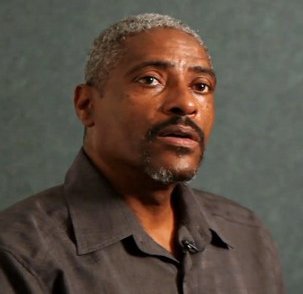
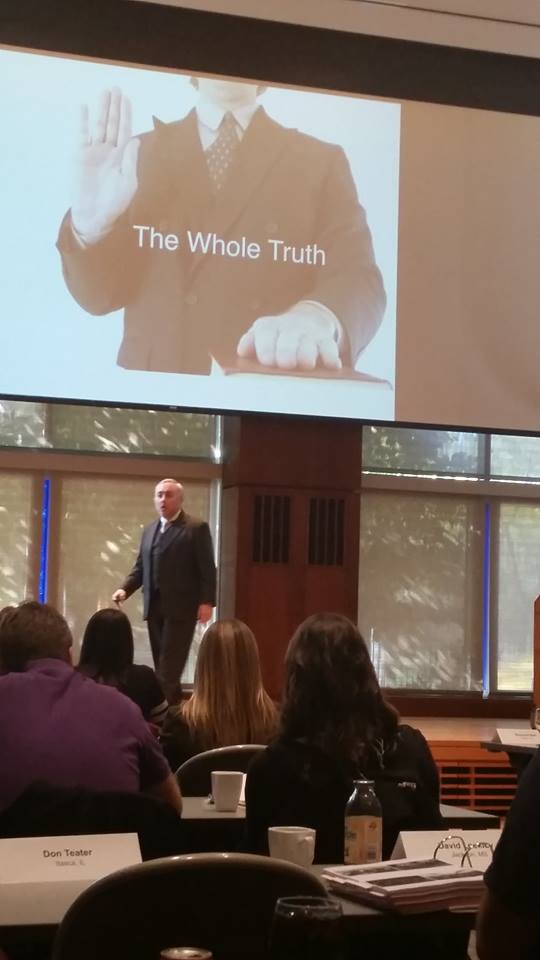
Pennsylvania DUI attorney Justin J. McShane, Esq. presents his lecture "Defending DUI Drug Cases" in Hartford, CT in December 2009. In Part 3: "Pharmacology," expert DUI Attorney McShane explains the differences, both in testing procedure and impairment determination, between DUI Alcohol and DUI Drug cases. The McShane Firm is the premiere DUI/DWI law firm in Harrisburg, PA. For more information, visit themcshanefirm.com.


-Justin J. McShane, Esquire, Pennsylvania DUI Attorney

I am the highest rated DUI Attorney in PA as Rated by Avvo.com

You can follow me on Twitter, Facebook or Linkedin

Harrisburg DUI Lawyer Justin J McShane Esquire earns
criminal law certification throguh NBTA

Board Certified Criminal Trial Advocate
By the National Board of Trial Advocacy
A Pennsylvania Supreme Court Approved Agency

The Carry-over Effect: Lack of Blanks between tests leads to false positive or inflated BAC results

Harrisburg DUI Lawyer false BAC resultImagine. You go into your doctor’s office for a routine physical. As part of that routine physical, the doctor takes your blood. You come back two weeks later where the doctor delivers the single worst sentence you have ever heard in your life: “I’m sorry but you have cancer.” Then comes ever worse news from the doctor when the doctor says: “You have one possible chance at living. You have to undergo radical chemotherapy and a bone marrow transplant immediately.” You are shocked. You are young. You feel healthy. There is no family history of cancer.


After you recover as much as you can from the initial shock, you ask the doctor: “How do you know?” The doctor tells you that your blood sample that the doctor took two weeks ago was sent to the lab for routine testing using a test called a Complete Blood Count (CBC) examining your blood contents along with many other people from his practice. The doctor informs you that based upon the test run you have an abnormally high White Blood Cell Count (WBC) which is indicative of malignancy. You are floored. Still in disbelief, he shows you the result. As the doctor hands you the result, the doctor explains to you that at this lab, the lab runs a bunch of CBC tests right in a row using the same single testing instrument. That as a cost and time saving measure, the lab does not perform tests in-between each of his patient tests to make sure the device is clear thus making sure each test is only a report unique to that particular test and not due to the previous test.
 

While looking at the result, you note that your sample was labeled as sample 14 meaning that there were 13 others tested before yours. You ask the doctor about that. He pulls out his other reports and discovers that immediately before your test, there was a test done of his other patient who was unfortunately in Stage III or terminal end stage of cancer but who is still fighting with a superhigh WBC result. The doctor tells you about this other patient’s results and condition. The doctor gets a visible frown on his face. Despite all of this information, the doctor still tries to schedule the chemotherapy and the bone marrow transplant.
 

You have got to be thinking to yourself…no way. I would not undergo all of that based upon the way the tests were performed. That’s crazy.

Well, exactly that type of testing and evidence is what happens in Court every day and all day long in DUI and DUI Drug cases in the United States. It is reckless and shameful.
 

When you are accused of a crime that is almost entirely based on a numeric value, which is essentially what occurs in a prosecution based strictly on a reported Blood Alcohol Content result or a DUI Drugs case, we all want to be sure that the result is accurate, precise, repeatable, reliable, traceable, reproducible, robust and true being unique to that individual accused and that individual accused alone. However, as we discussed before "A large problem in Gas Chromatography: No uniform standard for GC run position or composition", namely there is no order or reason as to what goes into the autosampler carousel and in what order the samples go into the autosampler.
 

This lack of standardization, even within the same lab and even from run to run made by the same technician, and especially with the nearly absent use of blanks is one of the fundamental flaws of Gas Chromatography for ETOH or drugs of abuse testing in America. In my considered opinion and in the general scientific community (as opposed to the law enforcement community), it is the single largest and most basic systemic problem with the way that Gas Chromatography is practiced in forensic testing today.
 

With this post, I will explain how the lack of using a blank before and after each unknown sample run invites well-deserved scientific scrutiny and rightly calls into question the conclusory reported and alleged result in every single case.
 

But first some background:
 

What is a blank?
 

Simply and generally, in analytical chemistry a blank is a sample that is prepared using the same methods that an unknown would be prepared within the run simply without the unknown added.
 

Ok, let’s translate that. In our case of assaying an accused’s blood which contains an unknown amount of analyte of interest (e.g., drugs of abuse or ETOH) is typically prepared by diluting the sample by adding a known amount of internal standard which is typically n-propanol when the unknown looked for is ETOH. [Blogger’s note: in the future a detailed post will be used to examine the use and potential problems when internal standards are used]. When a blank is created, the same exact amount of n-propanol that is added to the accused’s blood is added to a sample jar (in our case a headspace vial) but with no blood added. In simpler terms, it is a virgin sample with only n-propanol added. As a result, as there is only n-propanol, there should only be one peak on the chromatogram which corresponds to n-propanol. The lack of any other peaks is where the name of “blank” comes from in the analytical world.
 

Harrisburg DUI Lawyer blank chromatogram carry over effect
(Pictured above:  a blank with only n-propanol)


Why is this important?

In a phrase “carry-over effect” in another phrase an inaccurate inflated reported Blood Alcohol Content. Simply put, a false Blood Alcohol Content result. Think of it as contamination.
 

In analytical chemistry, carry-over effect can be thought in terms of pick up. When a carry-over event occurs the sample “picks up” the analytes of interest from a previous sample. A carryover effect is an effect that "carries over" from one experimental condition to another. It is a form of contamination from one sample to another.

Carry over in gas chromatography analysis can come from three typical sources: first, autodiluting [Blogger’s note: an entire future post will be dedicated to this concept]; second, injector contamination [Blogger’s note: an entire future post will be dedicated to this concept]; and third, remaining analyte on the column.
 

Whether direct injection or an autosampler is used, without a blank inserted before and after an unknown, then there is no way of scientifically knowing the alleged reported result is unique to that particular sample.
 

Until this very basic systemic flaw is solved, then it cannot be responsibly and scientifically asserted that the reported result is unique to the unknown analysis and not carried over from another analysis.

Harrisburg DUI Lawyer carry-over effect in gas chromatography
  (Pictured above:  an over lay of chromatograpms where in green there is the electrical signal as detected by a Flame Ionization detector when a Resolution Control Standard or Separation chromatogram is generated and in black is the blank run)

It is so easy to solve, yet no one seems to care. You just insert a blank. I guess the forensic science community doesn’t care because the result doesn’t affect them.
 

As an illustration, I draw your attention to a past post as a concrete example for this discussion.  In "Highest reported BAC .708: I call Shenanigans", we discussed an extremely high reported BAC result.  Much like our cancer example, would you like to be the next test sample after that superhigh result?  I would think not.

How about we start doing things in a scientifically responsible manner and run blanks in-between unknowns????

Share/Bookmark


-Justin J. McShane, Esquire, Pennsylvania DUI Attorney

I am the highest rated DUI Attorney in PA as Rated by Avvo.com

You can follow me on Twitter, Facebook or Linkedin

Harrisburg DUI Lawyer Justin J McShane Esquire earns
criminal law certification throguh NBTA

Board Certified Criminal Trial Advocate
By the National Board of Trial Advocacy
A Pennsylvania Supreme Court Approved Agency

Defending DUI Drug Cases: Part 2 from PA DUI attorney Justin J. McShane

Pennsylvania DUI attorney Justin J. McShane, Esq. presents his lecture "Defending DUI Drug Cases" in Hartford, CT in December 2009. In Part 2: "Drug Identification and Quantification," expert DUI Attorney McShane details the difference between impaired and metabolite states, and explains why "the numbers by themselves are meaningless or junk." The McShane Firm is the premiere DUI/DWI law firm in Harrisburg, PA. For more information, visit TheMcShaneFirm.com.


-Justin J. McShane, Esquire, Pennsylvania DUI Attorney

I am the highest rated DUI Attorney in PA as Rated by Avvo.com

You can follow me on Twitter, Facebook or Linkedin

Harrisburg DUI Lawyer Justin J McShane Esquire earns
criminal law certification throguh NBTA

Board Certified Criminal Trial Advocate
By the National Board of Trial Advocacy
A Pennsylvania Supreme Court Approved Agency

A wakeup call: Independence in Crime Labs is not enough

Harrisburg DUI Lawyer blood testingWhile independence is necessary for any laboratory to insure against bias, it is just a start. Without meaningful double blind unannounced proficiency-based testing of every technician conducted by yet and another independent certified set of laboratory auditors, then it means nothing. We also need the technicians to be true credentialed scientists having graduated from brick and mortar post-secondary institutions employing the scientific method in the discipline that they are formally trained in and not testifying beyond beyond the scope of their expertise. Finally, to make it have any sort of testing scientific meaningful, the methods must be robust and internally and externally validated.


Share/Bookmark


-Justin J. McShane, Esquire, Pennsylvania DUI Attorney

I am the highest rated DUI Attorney in PA as Rated by Avvo.com

You can follow me on Twitter, Facebook or Linkedin

Harrisburg DUI Lawyer Justin J McShane Esquire earns
criminal law certification throguh NBTA

Board Certified Criminal Trial Advocate
By the National Board of Trial Advocacy
A Pennsylvania Supreme Court Approved Agency

Defending DUI Drug Cases: Part 1 from PA DUI attorney Justin J. McShane

Pennsylvania DUI attorney Justin J. McShane, Esq. presents his lecture "Defending DUI Drug Cases" in Hartford, CT in December 2009. In this introduction, expert DUI Attorney McShane presents an overview of how DUI lawyers can use forensic science to successfully defend clients accused of DUI-D cases. The McShane Firm is the premiere DUI/DWI law firm in Harrisburg, PA. For more information, visit TheMcShaneFirm.com.


-Justin J. McShane, Esquire, Pennsylvania DUI Attorney

I am the highest rated DUI Attorney in PA as Rated by Avvo.com

You can follow me on Twitter, Facebook or Linkedin

Harrisburg DUI Lawyer Justin J McShane Esquire earns
criminal law certification throguh NBTA

Board Certified Criminal Trial Advocate
By the National Board of Trial Advocacy
A Pennsylvania Supreme Court Approved Agency

What's more important Sports or Courts?

Olympic doping lab world's most sophisticated

A dope-testing lab considered the most sophisticated in the world is up and running for the 2010 Winter Olympics in Vancouver.

I read this article the other day and it got me thinking: What's more important making sure a cheater doesn't win a race or making sure an innocent person is not convicted of a serious crime like DUI?

I have blogged before about the shoddy nature of our nation's forensics labs:

Winter Olympics and DUI TestinThere are more sophisticated ways of testing that aren't being used, procedures that are not being followed, and there are better ways to monitor DUI and drug testing.  Over the course of the countless DUI trials I have fought, I have seen the whole gambit of tainted blood and urine tests which end up producing results that if accepted would have convicted many of these innocent people.  Fortunately, as a premier forensics and DUI expert I was able to catch these flaws.  However, everyday people are convicted because of these mistakes.

Take a look at this article. The world's most sophisticated testing lab has been set up for the Winter Olympics but not to ensure justice in our courts.  Think about it.  Canada is spending an enormous amount of resources to ensure cheaters don't win medals but our lawmakers turn a blind eye to the fact that our forensics system is broken and many innocent people have gone to jail because of it.  WHY?

Preserving the purity and sanctity of sports is important but ensuring "justice for all" is the fabric of our society.


Share/Bookmark


-Justin J. McShane, Esquire, Pennsylvania DUI Attorney

I am the highest rated DUI Attorney in PA as Rated by Avvo.com

You can follow me on Twitter, Facebook or Linkedin

Harrisburg DUI Lawyer Justin J McShane Esquire earns
criminal law certification throguh NBTA

Board Certified Criminal Trial Advocate
By the National Board of Trial Advocacy
A Pennsylvania Supreme Court Approved Agency

Juries want forensic science in DUI cases: Interview by Lisa Bloom with Justin McShane

Catch this interview with national TV legal analyst Lisa Bloom and Justin McShane, a Harrisburg DUI Lawyer.  They discus the way that juries look at forensic science and crave it.


Share/Bookmark


-Justin J. McShane, Esquire, Pennsylvania DUI Attorney

I am the highest rated DUI Attorney in PA as Rated by Avvo.com

You can follow me on Twitter, Facebook or Linkedin

Harrisburg DUI Lawyer Justin J McShane Esquire earns
criminal law certification throguh NBTA

Board Certified Criminal Trial Advocate
By the National Board of Trial Advocacy
A Pennsylvania Supreme Court Approved Agency

Why forensic science testing for DUI BAC determination is the silly sister of analytical science: Good Laboratory Practices

I have written before, perhaps rhetorically:  Why if someone is allowed full due process of law are we also not entitled to due process of science?

It seems backward.  Law at the expense of science or science at the expense of law, doesn't it?

One would think rationally that we would be entitled to full scientific safeguards and best practices, but in the forensic environment generally and in the DUI testing for BAC analysis, it is sorely lacking.

It seems that as a society we are more concerned with the prospect of having a new pharmaceutical wrongly introduced into the market than we are in getting a conviction wrong.

As a proof of the above, just look at any pharmaceutical lab and the rigorous documentation and process application validity that goes into developing and testing a pharmaceutical before it is allowed into production and distribution.  In that industry it is called "Good Laboratory Practices" (GLP).  This is to be contrasted to the near opposite of that which is forensic testing.

Harrisburg DUI Lawyer Good Laboratory Pracitces GLP

In the clinical and research arena, the phrase Good Laboratory Practice or GLP generally refers to a system of management controls for laboratories and research organizations to ensure the consistency and reliability of results as outlined in the Organization for Economic Co-operation and Development (OECD) Principles of GLP and national regulations.

Good Laboratory Practice (GLP) embodies a set of principles that provides a framework within which laboratory studies are planned, performed, monitored, recorded, reported and archived.

There is no equivalent to this in forensic science generally and specifically in DUI forensic testing for BAC determinations.  Sadly there are no national or international standards.  Each state and sometimes each jurisdiction within a state is allowed to setup and use in whatever manner they see fit, for their DUI testing for BAC analysis.  Crazy, huh?


Share/Bookmark


-Justin J. McShane, Esquire, Pennsylvania DUI Attorney

I am the highest rated DUI Attorney in PA as Rated by Avvo.com

You can follow me on Twitter, Facebook or Linkedin

Harrisburg DUI Lawyer Justin J McShane Esquire earns
criminal law certification throguh NBTA

Board Certified Criminal Trial Advocate
By the National Board of Trial Advocacy
A Pennsylvania Supreme Court Approved Agency


You have heard of the NAS (National Academy of Sciences) study, but have you heard of STARD?

Congress recently commissioned the National Academies to make a searching examination of the state of forensic science in the Courtroom in America. This systemic and detailed examination resulted in a report entitled "Strengthening Forensic Science in the United States: A Path Forward". 

The forensic science community was all ablaze as a result of the condemning report of the National Academy of Sciences.  This report was cited in the Supreme Court decision of Melendez-Diaz which I previously reported on in this blog.  Just in case you have not heard of the NAS report before, it was characterized as follows:

A congressionally mandated report from the National Research Council finds serious deficiencies in the nation's forensic science system and calls for major reforms and new research. Mandatory certification programs for forensic scientists are currently lacking, as are strong standards and protocols for analyzing and reporting on evidence. There is also a scarcity of peer-reviewed studies establishing the scientific bases and reliability of many forensic methods.

To say it was a wake-up call to the American judicial system would be an understatement.

A similar move was afoot in the academic world when it came to published research.  Alarmed by the lack of transparency as well as being very alarmed by the lack of meaningful reporting in such papers and noting the academic quality in published research as generally declining, the academic world undertook a harsh examination of its own proverbial house.  This resulted in the STARD checklist.

The Standards for Reporting of Diagnostic Accuracy (STARD) steering committee searched the literature to identify publications on the appropriate conduct and reporting of diagnostic studies and extracted potential items into an extensive list. Researchers, editors, and members of professional organisations shortened this list during a two-day consensus meeting with the goal of developing a checklist and a generic flow diagram for studies of diagnostic accuracy.

Harrisburg DUI lawyer Justin McShane demands STARD based research be used


The aim of STARD can be stated as follows:

The aim of the STARD initiative is to improve the accuracy and completeness of reporting of studies of diagnostic accuracy, to allow readers to assess the potential for bias in the study (internal validity) and to evaluate its generalisability (external validity).

The STARD statement consist of a checklist of 25 items and recommends the use of a flow diagram which describe the design of the study and the flow of patients.

What does this have to do with DUI?

It is quite simple.  None of the government funded research in the development or the continuation of the NHTSA-approved curriculum meets the academic consensus of STARD.  Whether it is the original or subsequent research that supposedly validates the Standardized Field Sobriety Tests (SFST's), the Drug Recognition Expert (DRE) program, or even MADD's own statistics in terms of DUI, DUI accidents and/or DUI-related deaths. 

In order for any academic research to be both academically and scientifically valid and for these or any published reports to be valid, they must meet the STARD standards.  Otherwise these reports are not academically acceptable and by that very definition the conclusions contained within it are not scientifically valid.  The raw data on much of the research is not available or has not been kept.  It is not a transparent process.  There is oftentimes manifest and well-known but undocumented bias by the researchers in favor of a particular conclusion.  Yet, this Government-funded research is not only allowed in the Courtroom but oftentimes trumps other peer-reviewed meaningful studies that do meet the STARD standards that stand in opposition of the non-STARD government presentments. 

Why in the Courtroom of law in America does true validated science come in last place and this whatever you want to call it pseudo-science wins?

 Harrisburg DUI lawyer uses validated science in DUI cases

(“In God we trust; all others must bring data.” --W. Edwards Deming, physicist and quality improvement pioneer)


Share/Bookmark


-Justin J. McShane, Esquire, Pennsylvania DUI Attorney

I am the highest rated DUI Attorney in PA as Rated by Avvo.com

You can follow me on Twitter, Facebook or Linkedin

Harrisburg DUI Lawyer Justin J McShane Esquire earns
criminal law certification throguh NBTA

Board Certified Criminal Trial Advocate
By the National Board of Trial Advocacy
A Pennsylvania Supreme Court Approved Agency

WellSpan is to be commended, but why people who have been convicted for decades of a DUI should be upset

On Wednesday and Thursday of this past week, Rick Fulton of the Gettysburg Times, wrote reported that WellSpan hospital system in Central Pennsylvania will no longer support or offer to provide blood testing for Court use of Blood Alcohol Content testing (BAC). The BAC testing, of course, is so important in a DUI prosecution and is one of the fundamental pieces of, and oftentimes the only, evidence against a citizen among us who has been accused of a DUI Rick Fulton wrote a great article.  You can access it in full here “Hospital explains ban on DUI tests”.
 

It presents two main issues as to why the Hospital system will no longer offer or support BAC testing. I am proud to say that our firm, The McShane Firm, LLC has been successfully litigating both aspects in Pennsylvania. In fact, to our knowledge no other attorney or firm has advanced these types of defenses in Central Pennsylvania and likely not in the entire Commonwealth of Pennsylvania.
 

In his article reporter Rick Fulton wrote:


William Lavery, manager, WellSpan Office of Health Public Relations & Communication at Gettysburg Hospital, confirmed Wednesday that the testing service was being discontinued at the hospital, but that the facility will continue to draw the blood.

[William] Lavery, manager, WellSpan Office of Health Public Relations & Communication at Gettysburg Hospital] stated there were two fundamental reasons for the discontinuation of the service, the first concerning accreditation of the hospital’s laboratory and the second relating to increased demands on the laboratory.

Regarding accreditation, he said, “In our case, the hospital laboratory is unable to meet a new testing regulation introduced by the College of American Pathologists. They generate standards and they are our primary accreditation agency.”

“If we were to lose accreditation by not adhering to their regulations, we’d really jeopardize the lab’s primary role of providing health care to our patients,” Lavery said.

In addition, the legal system, particularly DUI defense attorneys, are demanding more and more from laboratories that conduct BAC testing.

This is causing an increasing drain on the hospital’s resources.

“It’s (legal demands) becoming an increasing impact on our lab resources...trying to meet the legal requirements that these cases (generate),” he said.

“More and more,” Lavery stated, DUI defense attorneys subject the hospital lab’s to strenuous (expectations), which include responding to subpoenas that go beyond the hospital’s ability to respond to them.

“Attorneys are mandating that a clinical (hospital) lab be able to demonstrate forensic abilities, to respond to documents, provide staff competency documentation...those are things a forensic lab is more equipped to handle,” he stated.

The load and responsibility has caused an “increased demand on our resources...A clinical (hospital) lab may not be able to operate (the same level of service) as a forensic lab,” Lavery stated, pointing out that what is being asked of the hospital’s clinical laboratory are things that a forensic lab deals with routinely.

The majority of the hospitals in the area (south central Pa.), he noted, have already ceased DUI testing, according to the communications manager. “A lot of area hospitals made that decision a couple of years ago.”


I have blogged about this first issue in “Piece of Paper Says Your Guilty”.  It outlines the recent United States Supreme Court decision of Melendez-Diaz and its import.


The Real Problem
Now I want to complete the thought of the article and blog about the absolute consensus of the scientific community that hospital blood testing is not forensically acceptable. I will try to explain why as briefly as I can. For over five (5) years, I have personally been leading the fight in Pennsylvania in this area of medicolegal litigation pushing the science or really the lack of forensic reliability of hospital blood BAC testing.

First some background....

In the Commonwealth of Pennsylvania, there are various degrees of prohibited BAC levels, called per se levels. They are 0.08, 0.10 and 0.16 with enhanced penalties depending upon what your blood level is. These per se levels are measured as grams percent AND MUST BE expressions of whole blood. A conviction on a per se offense cannot be based upon plasma or serum. The expression of the BAC must be to whole blood and whole blood only.

So, we begin at the beginning, shouldn’t we?


Are hospital blood tests truly whole blood tests?

As shocking as it is to most people, the real answer is NO.

There is but one analytical device that performs a whole blood analysis, it is called a gas chromatograph. It has a detector to allow for quantification which is usually a Flame Ionization Detector. Using a mass spectrometer is the best way of conclusively confirming the analysis, but it is not often used.

So what are they doing?
The hospital based blood test performed at the hospital is scientifically referred to as a plasma enzymatic indirect test based on spectrophotometry (colormetic response) of treated de-proteinzed vortexed, centrifuged aspirated supernate of the original whole blood specimen.

Wow what the heck does that mean? Don't worry keep reading and I promise it will all make sense to you.

We will shorten all of this up and simply refer to it as “hospital blood” or “hospital blood testing”.

Ok. So let’s take it step by step.
 

PROBLEM 1:

An "enzymatic indirect test" means that we are not testing how much ETOH (drinking alcohol or Ethyl Alcohol) is in the whole blood. Instead what we are testing is an indirect measure. We use a known enzyme (NAD+) amount and hope that it will react to ETOH and create a quantifiable result as the two interact resulting in Acetaldehyde+NADH+H+
 

So chemically, it looks like this….
 

Ethyl Alcohol+ NAD+ ----> Acetaldehyde+NADH+H+
 

Instead it is measuring the reaction difference to an enzyme at a specific wavelength. Hospital analysis is by enzyme assay. An enzyme is added to the totally prepared sample. That enzyme (NAD) reacts in the presence of alcohol (and other things) and forms another enzyme (NADH). The amount of NADH is then measured (as relative to the NAD remaining) to determine the amount of alcohol in the sample.


Still don’t follow
? Don't worry, I follow through on all of my promises keep reading.  I will make it clear.

Ok it’s really simple if we relate it to something we know---the good old bathroom scale.

I want you to suppose that you want to know how much your 6 year old daughter weighs. There are basically two (2) ways: a direct way and an indirect way.


What would make the most sense and is the most accurate is to take out your bathroom scale and put your daughter on it and voila, we have the weight. This would be like using a Gas Chromatograph. It is a direct measure of the weight of your daughter.
 

Now, let’s think about another way to try to get at her weight. I suppose you could step on the scale and see how much you weigh (a known), get off the scale and then have your 6 year old daughter hop on your back piggyback style and then both you and her on your back step on the scale having seen what your combined weight is. You both get off. You would then take your combined weight and subtract it from your known weight that you got on the first measurement and voila, you might have her weight.

What happens next? Your spouse who watched the whole escapade looks at you with a puzzled look and says you are silly and she doesn’t understand why you did it this indirect way when the direct way would be easier and more accurate. This is exactly like hospital blood.
 

Makes sense now, right? Good.


In conclusion, indirect measurements are never forensically or scientifically acceptable when there is a direct method available. That is the first reason why hospital blood is forensically and scientifically unacceptable.
 

PROBLEM 2:

Issue number two is the type of analytical measuring device used. It is based on spectrophotometry (a colormetic response). Spectrometry is grossly over simplified as this. Spectrophotometry involves the use of a spectrophotometer. A spectrophotometer is a photometer (a device for measuring light intensity) that can measure intensity as a function of the color (or more specifically the wavelength) of light. Important features of spectrophotometers are spectral bandwidth and linear range of absorption measurement.  It is rooted in Beer's Law.

In short, the sequence of events in a spectrophotometer is as follows:

  1. The light source shines into a monochromator.
  2. A particular output wavelength is selected and beamed at the sample.
  3. The sample absorbs light.

We use an energy source such as a light, and a detector (specifically a photo detector) on the other end of sample chamber. Then we run the sample, or analyte, in-between the energy source and the photo detector. If the analyte is not present, it is smooth sailing as the energy emitted by the energy source should not be impacted (i.e., no loss of signal energy-it remains at the same strength). If there is analyte present, then it will interfere with the energy emitted by the energy source. The photo detector detects less energy. A comparison is made between what we would expect versus what we got as measured by the photodetector.

Colormetric means that there is a color response (lighter or darker in this case) that depends upon the concentration of the analyte.
 

Wow? What does that mean?


Here are good pictures that show what I was conveying.

Think of taking a laser pointer and trying to shine it through a glass of clear water versus a glass of Kool Aid.  The laser pointer will mostly go through the clear water with little loss of signal, but the Kool Aid experiment will result in much less signal going through.  It's that simple.

PROBLEM 3:

The third issue concerns the limitation of the technology itself. As mentioned above, the machine is based upon spctrophotometry and is a colormetric response. As such we need something that is basically pure and clear.  Otherwise, if it is dark and dirty, then the response is not utterly remarkable. In other words, you cannot tell. What is dirty and darker than blood?

Blood is a viscoelastic complex matrix full of a lot of stuff. Hence, plasma is used. Whole blood is defined as blood from which none of the elements have been removed. Plasma is defined as the fluid portion of the blood in which particular components are suspended.  The components that are suspended consist of red corpuscles, white corpuscles and platelets. Whole blood and plasma look very different as one can see below.


So to clean it up, and transform it into plasma, they have to do the following. They have to strip the protein from it. This is done by adding a de-proteinizing agent such as Trichloroacetic Acid (TCA). TCA will bond with the protein and after centrifuging, it will become solid and a noticeable pellet will form at the bottom.

The blood is further transformed through the centrifuging process. Just like anything that is centrifuged, the heavy parts go to the bottom and the lighter parts are separated to the top. This is called the supernate (the top stuff) and the precipitate (the bottom stuff) division. With blood, heavy parts such as the blood’s red blood cells and the pellet from the TCA reaction are at the bottom. The plasma and the alcohol (if there is any) are at the top because they are lighter.  
 

Next the top part is removed by pipetting. This is called aspirating the supernate. [as an aside, one hospital lab surprisingly doesn’t use pipettes to get an accurate amount, but rather simply pours the supernate into a testing cup]. The aspirated supernate then makes its way into the analytical device.

Now if you are paying attention, you might be asking yourself "Hey? What happens to all of the rest of the specimen?"  The answer is that it gets thrown out. It is never analyzed.


PROBLEM 4:
This is the perfect lead into the fourth issue as to why hospital blood is forensically unacceptable. It has to do with the legal requirements to sustain a conviction. As mentioned above, in the Commonwealth of Pennsylvania, there are various degrees of prohibited BAC levels, called per se levels. They are 0.08, 0.10 and 0.16 with enhanced penalties depending upon what your blood level is. These per se levels are measured as grams percent AND MUST BE expressions of whole blood. A conviction on a per se offense cannot be based upon plasma or serum. The expression of the BAC must be to whole blood and whole blood only.

So what do they try to do?


So in typical lawyer fashion, we try to force the round peg into the square whole and force a “conversion” factor that is supposed to adjust or convert the raw number for that big legal problem.

Sounds good in theory if you don’t mind the indirectness, but here is the dirty little secret. The scientific community cannot agree on what this all important number should be.


First, there is absolutely no consensus in the scientific community as to the proper conversion factor. There is no number. Therefore, as there is no scientific agreement, then no number should be used by the Courts. It is a basic Daubert/Frye matter. The government as the proponent of the evidence has the burden to prove it is reliable and based on sound science. The very fact that there are studies that conclude that there is overstatement of plasma to whole blood as low as 1.10 overstatement to as high was 1.59 make it so. That is a 69% swing. Come on!


The conversion factor depends on hematocrit (packed cell volume) entirely (well almost entirely, but for the sake of brevity it is the most important part). Serum or plasma (almost-one article had a statistical artifact) always over estimates BAC. Plasma actually much more so.

PROBLEM 5:

The fifth issue has to do with the specificity. In order for a measuring device to be acceptable it has to measure only what it intends to measure specifically to the exclusion of everything else.

What does that mean?

If you went to Home Depot and bought a tape measure, but when you got it out of the box, it clearly was mislabeled in that it looks like a ruler, but you unspool it and it turns out to have no markings on it, and it turns out to have a thermometer in the middle of the spool.  Boy that is a problem, isn't it?  They are both measuring devices:  one for distance, the other for temperature.  But the crappy tape measure that is really a thermometer is not a specific measuring device as to distance at all.

So here is a fundamental flaw as to hospital blood.  It also is NOT specific to ETOH to the exclusion of all other matters. So, it is not direct and not specific.

Wow!


One of the well know problems is the use of IV administered ringers lactate. Some of our clients were at the hospital due to injury. If so, we would want to look for ringers lactate or any sort of ringers solution application being used OR if there had been any sort of significant trauma as that will release lactate as well.


A little history...Ringer's saline solution was invented by Sydney Ringer, a British physiologist. The solution was further modified by Alexis Hartmann for the purpose of treating acidosis in children. Hartmann modified the solution by adding lactate, which mitigates changes in pH by acting as a buffer for acid. Thus the solution became known as 'Lactated Ringer's Solution' and later, 'Hartmann's solution' Lactated Ringer's Solution is often used for fluid resuscitation after blood loss due to trauma, surgery, or a burn injury. Previously, it was used to induce urine output in patients with renal failure.  Lactated Ringer's Solution is used because the byproducts of lactate metabolism in the liver counteract acidosis, which is a chemical imbalance that occurs with acute fluid loss or renal failure.


The intravenous dose of Lactated Ringer's Solution is usually calculated by estimated fluid loss and presumed fluid deficit. For fluid resuscitation the usual rate of administration is 20 to 30 ml/kg body weight/hour. Lactated Ringer's Solution is not suitable for maintenance therapy because the sodium content (130 mEq/L) is considered too high, particularly for children, whereas the potassium content (4 mEq/L) is too low, in view of electrolyte daily requirement.
 

Why is this so important?

You have to understand that in a trauma situation, they don’t care about the legal ETOH. They care about keeping someone alive and not allowing them to go into shock. So, oftentimes they will put IV’s into each arm and infuse (i.e., squeeze the IV bag really hard and rapidly) to get into the veins as soon as possible. If they take the legal ETOH sample on the same arm, then they have really really large issues. It is an electrolyte replenishment therapy (i.e., fluid resuscitation).  It invites havoc into the BAC determination and process.


The effect of ringers on a hospital blood test has to do with the manner of hospital analysis not the fact that the hospital test is a plasma test. As explained above, hospital analysis is by enzyme assay. An enzyme is added to the plasma sample when it is within the machine. That enzyme (NAD) reacts in the presence of alcohol and forms another enzyme (NADH). The amount of NADH is then measured (relative to the NAD remaining) to really indirectly determine the amount of alcohol in the sample.

So, the problem lies in the contents of the ringers lactate. The lactate reacts with LDH to form pyvurate. During this process additional NAD is converted to NADH, giving a false high alcohol result. In fact, it can give a positive alcohol reading where no alcohol is present. It is just frankly impossible to tell the true endogenous ETOH result.

The machine is totally blind to what is due to Ringer's Lactate and what is due to a person drinking.Stated differently, the machine cannot tell the difference between ETOH created by this process and ETOH actually consumed by the person.  All it sees is more NADH.  Hence, it is not specific.


They can test for lactate levels but they never do.

Ringers lactate is not the only source of lactate, trauma (soft tissue or bone) also releases lactate.  Lactic acid build up on a well-trained athlete can also interfere. Finally, shockingly in and of itself, TCA itself creates lactate! Remember TCA that was added to the sample itself as we described above.

PROBLEM 6:

The final issue has to do with the general scientific and legal communities' view of hospital blood testing. Most of Europe, Asia and Australia abandoned hospital blood testing as a legitimate method of analysis for forensic purposes and bans them entirely from the Courtroom.  This was done many, many years ago.

THERE ARE MORE REASONS

These and many more well-known problems have been well documented in the scientific community for decades.

There are actually a lot more than six (6) reasons why hospital blood is never forensically acceptable including, but not limited to:  (a) the lack of meaningful detailed chain of custody for the tested specimen and all of the accompanying component materials making up the system of the test, (b) the lack of suitable criteria for preventive maintenance, (c) lack of or insufficient schedule of calibration both internal and external, (d) the lack of full documentation of or even the non-use of a third party vendor calibrators and blanks that are either traceable to NIST or USP grade materials, (e) the lack of true meaningful and independent blind proficiency testing of the technologist (the person who runs the sample), (f) the re-use of consumables such as the specimen prep cups and the TCA containers, and yes, even pipette tips without an acceptable Standard Operating Procedure that will insure cleanliness of the items reused, (g) the manufacturer of the machine’s own admonition that the machine is not intended to be used for forensic testing and so on and on and on.

Credit where credit is due….
I would be remiss if I did not commend WellSpan Hospital systems for acknowledging these important issues. I am told that this trend of recognizing the forensic unacceptability of hospital blood testing has continued with several other hospitals also similarly conceding the issue throughout Pennsylvania.  I thank WellSpan for acknowledging and pledging to discontinue the unacceptable forensic practice of hospital blood testing.


So, it begs a question, doesn’t it?

We have been allowing hospital blood testing go on for decades with thousands upon thousands of convictions as a result. Not just here in the Commonwealth of Pennsylvania, but elsewhere in the United States.

Is there anything to be done for those who have been falsely convicted based upon forensically unacceptable science?

We did this with lead bullet analysis, DNA exonerations and other now abandoned quasi-forensic sciences, what will be done?

Or sadly is this yet another example of how there are another set of Rules that apply to DUI cases?

I also need to give a big thank you to the National College for DUI Defense, Inc. where I was exposed to these issues for me to latter develop.  What a great group of scientist-lawyers who live the College's motto:  "Justice Through Knowledge".  Also an equally big thank you to various experts that have helped me through the years in developing my scientific and technical knowledge in this area.  In no particular order they are:  Dr. Joseph Citron, Dr. Thomas Brettell, Dr. Stephen Rose, Dr. Al Staubus, Dr. A. Wayne Jones, Wanda Marley and Janine Arvisu.


In closing, I offer this.  As it seems likely that hospital blood will cease in the MidState in short time.  If any attorney outside of Pennsylvania would like to mount well-developed Frye/Daubert challenges to hospital blood testing as we have done here, I am willing to help you free of charge.  Heck, I will even conduct the cross and directs of the experts if you let me. I will pay my own way to the hearing.  This is how important this issue is to me.  Just contact me.

 You can see my qualifications and experience at avvo.com

You can follow me on Twitter or Facebook or Linkedin.

[A special thank you to Josh D. Lee, Esquire of Oklahoma for helping to edit this work]

Share/Bookmark


-Justin J. McShane, Esquire, Pennsylvania DUI Attorney

I am the highest rated DUI Attorney in PA as Rated by Avvo.com
You can follow me on Twitter , Facebook or Linkedin.

Piece of Paper Reads: "You're Guilty". Well Not Any More.

Imagine a place where you are accused of a crime.  Where you can lose your liberty.  Where you can lose your job.  Where you can lose everything you have worked so very hard for.

Imagine that during this trial, the Government only introduced a single piece of paper that reads "You're Guilty".  That's it. 

Imagine during that trial, you have no way of challenging or questioning that single piece of paper.  That is it.  You are guilty.

 Where is that place???

Iraq?  Afghanistan?  China?  North Korea?

It was actually, here, in the good old United States.  That was until last week.  That is exactly what happened all across the United States and even in the Commonwealth of Pennsylvania.

But, you say, we have The United States Bill of Rights and the Sixth Amendment which reads:

In all criminal prosecutions, the accused shall enjoy the right to a speedy and public trial, by an impartial jury of the State and district where in the crime shall have been committed, which district shall have been previously ascertained by law, and to be informed of the nature and cause of the accusation; to be confronted with the witnesses against him; to have compulsory process for obtaining witnesses in his favor, and to have the Assistance of Counsel for his defence.

It used to be that the Government would simply enter the breath test result or the blood lab result with no live witnesses.  One piece of paper.  They would enter that one piece of paper and you were done.  You cannot cross-examine a single piece of paper.  It cannot speak back.  It cannot answer questions.  So, you were left with a magic number and no means to challenge it.


Last week, the United States Supreme Court came down with a landmark decision entitled Melendez-Diaz v. Massachusetts.  This case confirmed the accused's land standing, but sequentially eroded Confrontation Right inherent in the Sixth Amendment of the United States Constituion. 

Now the Government will have to provide for a live witness if they want to introduce into Court any form of forensic science or analysis result.


MELENDEZ-DIAZ SUMMARY

The Sixth Amendment of the Constitution guarantees each individual the right to confront any witness brought against him or her. This right is a fundamental right and as such must be guarded heavily. This right to Confront extends to and includes the “use” of an affidavit which is defined as a declaration of facts written down and sworn to by the declarant before an official authorized to administer oaths. (Black’s Legal Dictionary) It has also been defined by the highest court in the land as a solemn declaration or affirmation made for the purpose of establishing or proving some fact. (Crawford) (emphasis added). Upon reviewing the “certificates” presented by the prosecution in the case against the defendant, the Davis court determined that said certificates were the functional equivalent of live, in court testimony, as it does precisely what a witness does during direct examination, establishes or proves a certain fact.


In the specific case against Melendez-Diaz the government and the dissent raised a number of arguments, all of which the Majority opinion was able to successfully thwart by reviewing previous case law on the issue. The first argument raised was that analysts were not “accusatory” witnesses. The Court, using a strict interpretation of the Constitution, held that it was not that an individual is accusatory which demands confrontation, but instead it is that the witness is being brought “against” the defendant. In order to testify “against” someone an individual provides testimony against the defendant by proving one fact which is necessary for conviction. Furthermore, the Court outlined two (2), and only two (2), classifications of witnesses: there are those that are used against the witness, which must be produced according to the Confrontation Clause, and those that are in favor of the defendant, which the defendant may chose to call pursuant to Compulsory Process. There is no classification for “accusatory witnesses”

The second argument raised was that analysts are not “conventional” witnesses as they did not perceive the actual crime created nor did they observe any human action related to said criminal activity. The Court, however, was not convinced in this reasoning as it would exempt all expert testimony from the Confrontation Clause since most expert witnesses have neither witnessed the crime or any human action related to the crime. Furthermore, the Court went on to analogize an individual who is asked by the police to write down what he or she saw to a request made by the police to analyze an object and to interpret what said test results reveal; both of which are similar and should be treated similarly.

The third argument was that there was a significant difference between testimony which recounts a historical event and testimony in regards to neutral, scientific evidence. This argument, however, was too similar to the reasoning in Ohio v. Roberts, in regards to the indicia of reliability, which was overturned in Crawford. The Court noted that there are a number of reasons why the reliability of the test must withstand the cross examination process. These reasons highlighted in particular the fact that the majority of laboratories for forensic evidence are administered by a law enforcement agency and reports from said laboratories must frequently be submitted to the head of the agency which can lead to pressure or incentives to alter evidence in a manner favorable to the prosecution. In addition, the Court likened an analyst who falsified a lab report to a witness who fabricated his or her story when providing information to the police and stated that the fear of cross examination will act as a deterrent in the offering of such false reports. Finally, the Court analogized a forensic analyst to an expert witness who is asked to render his or her opinion. Without the ability to cross examine neither the analyst’s, nor the expert’s training, or lack thereof, will be highlighted for the jury and the jury will, therefore, be missing a crucial fact to weigh the expert’s or analyst’s credibility.

Another argument raised was that the analyst’s report is a business record and as such can be admissible regardless of hearsay issues. This argument, like the above mentioned arguments, is also fatally flawed as the Court in Palmer v. Hoffman expressly stated that even where a report is created in the regular course of business, if said report is also the production of evidence for the use of trial the Confrontation Clause will apply. The Court in Melendez-Diaz used this case and stated specifically that an analyst report, while possibly a business record, will always be prepared for use essentially in court and as such is bound to the requirements of the Confrontation Clause. The very nature of the business records exception is that the report is created for the administration of the entity’s affairs and not for the proving or establishing some fact, this fact alone is what makes said documents not testimonial. Where, however, it is prepared for the possibility of being used at trial it makes that same report testimonial in nature and therefore subject to the Confrontation Clause.

The next argument is that a defendant can easily subpoena the analyst to appear at trial. This argument, however, overlooks the fundamental principle that the prosecution has the burden of presenting its witnesses and that it is not the defendant’s burden to bring any adverse witnesses into trial. Moreover, just because a defendant has the ability to subpoena an individual does not guarantee that that individual will agree to testify or even appear at trial further highlighting the need for the prosecution to bring forth any witness against the defendant.

The final argument brought forward is that by requiring analysts to testify, the court will be run less efficiently and trials will drag on. The Court does not agree with this assumption, however, as there are a number of states which have their own statutory provisions requiring analysts to be present in court when the report is entered into evidence and such inefficiency has not yet been noticed. The Court further stated that inefficiency, alone, will never defeat or overcome a Constitutional right. While a defendant will always have the burden to raise a Confrontation Clause claim, there may still be limitations on raising that claim which include a notice-and-demand requirement which some states have already created. This requirement will place a timing limitation on when such claims can be raised and the Melendez-Diaz court has expressly stated that the simple notice-and-demand requirement is constitutional as it has not revoked the defendant’s right to making said claim, it only places a limit on when that claim can be made. Finally, the Court noted that it will be highly unlikely for defense attorneys to insist on live testimony which will only highlight, rather than cast doubt on forensics, and that defense counsel will only demand the presence of an analyst when the procedures used or other similar issue is present in the case at hand thereby removing the concern over inefficiency from concern.